Circuit Boards: The Basics

Creating a circuit board can be a complex process beginning with the design itself. With advancing and progressive technology, the processes have become increasingly simplified with the help of PCB design software and innovations in the PCB manufacturing industry.
AdvancedPCB is the leading PCB manufacturer known for its high quality and innovation. The company offers expanded circuit board manufacturing capabilities, quickturn circuit board prototyping services, and in-house circuit board assembly. To learn more about how AdvancedPCB can help with your PCB design, manufacturing, and assembly requirements, click here to contact your Sales Representative.
What is a Circuit Board?
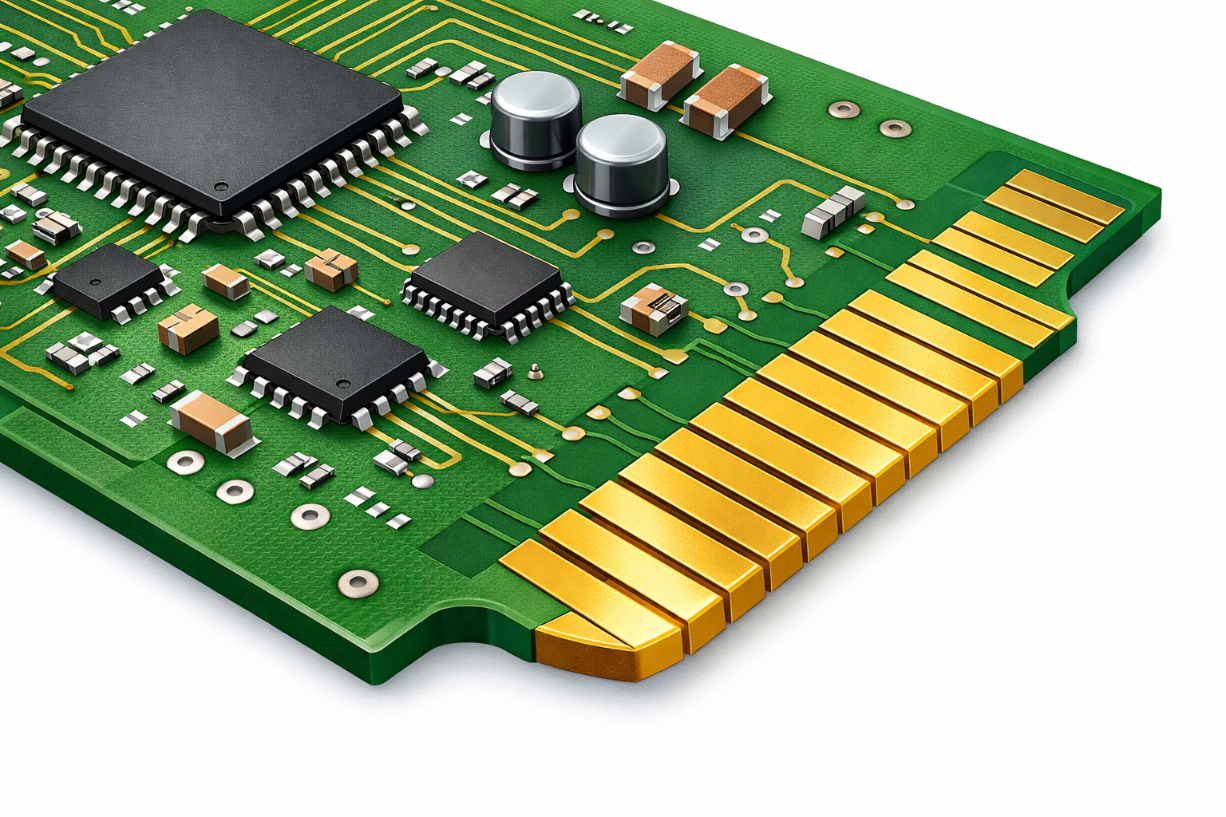
The purpose of a circuit board is to hold copper circuitry (or trace) to conduct signals equivalent to the way a wire would, while acting as the physical support to mount the independent electronic components it connects together for a desired function. The copper trace etched on the circuit board supplies the direct connection. The material used as the foundation for circuit boards is customarily glass-reinforced epoxy laminate, but there are many different types of laminates that can be used to support different circuit board requirements and end-use specifications.
A PCB is the electronic device’s skeletal frame and a solid base. A PCB possesses electrical interconnections amid the mechanisms. There are a variety of circuit board types including: single-sided (one copper layer), double-sided (two copper layers), and multi-layer (inner and outer layers), microwave and RF circuit boards and more.
The 2 layer and multi-layer PCBs rank among the most popular and can harbor 40 or even more stacked conductive layers into a single circuit board.
How Does a Circuit Board Work?
Circuit boards are engineered to for many different applications and every circuit board design is intended to connect different electronic components to achieve a desired result, but most circuit boards make use of the following common components to manipulate electrical conductivity:
Capacitors – Store the electric charge of the circuit board
Resistors – Provide set amount of electric current resistance
Inductors – Stores energy as a magnetic field
Diodes – Enable the electric current to move in one direction
Other essential elements found in circuit boards are:
Copper – The copper layer is essential to the PCB and are thinner than its counterparts. The copper is responsible for carrying the electric charge.
Via holes are drilled by precise drilling instruments and cleaned to ensure they do not become clogged. Electric charge flows through these holes and is carried between each layer of the PCB.
Solder Mask – The last layer protects the copper and metal from damage. The solder mask provides a protective plating, which is usually green in color, but it can be any other color.

AdvancedPCB
Related Posts
Prototype PCB vs. Full Spec Production: A Guide for Design Engineers
2-Layer vs. 4-Layer Printed Circuit Boards: How to Choose the Right Option