


Advanced Technology PCB Manufacturing
.jpg)
Where complex PCB designs are manufactured with uncompromised quality
AdvancedPCB has been manufacturing advanced technology PCBs in the United States since 1977. With six U.S. facilities and decades of fabrication experience, we support a broad range of advanced PCB technologies including RF and microwave PCBs, HDI constructions, thermal management designs, heavy copper boards, and high-reliability multilayer stackups.
Advanced PCB designs often require fabrication processes beyond standard multilayer construction. As routing density increases, frequencies rise, power densities grow, and reliability requirements become more demanding, fabrication capability becomes a critical part of overall system performance.
RF & Microwave PCBs
As operating frequencies increase, dielectric stability, conductor loss, and transmission line geometry become increasingly critical to signal integrity and predictable RF performance.
Our RF fabrication capabilities include:
- Rogers RT/duroid, RO3000, and RO4000 laminate systems
- Taconic PTFE/glass and RF material families
- Hybrid RF + FR-4 multilayer constructions
- Controlled impedance structures including CPW and grounded CPW
- Blind and buried vias with back drilling for via stub reduction
- Controlled impedance orders with impedance coupon verification and TDR data when specified
Standard FR-4 materials exhibit increasing dielectric and conductor loss as operating frequencies rise, making material selection and process control critical for RF and microwave PCB performance.
Manufacturing processes can align with IPC-6018 Class 3 requirements for high-frequency PCB applications.
High Density Interconnect (HDI) PCB Manufacturing
HDI PCB technology uses laser-drilled microvias, sequential lamination, and fine-line circuitry to achieve routing densities beyond the capabilities of conventional through-hole PCB fabrication.
AdvHDI capabilities include:
- Laser-drilled microvias typically down to 0.004" diameter depending on stack-up and material selection
- Copper-filled stacked and staggered microvia structures
- Via-in-pad plated over (VIPPO) constructions
- Sequential lamination
- Laser Direct Imaging (LDI) for fine-line accuracy
- Blind and buried via structures supporting fine-pitch BGAs
Stacked microvias maximize routing density but require tight process control and validated copper fill integrity to ensure long-term thermal cycling reliability.
HDI structures are commonly designed in accordance with IPC-2226 guidance for microvias, sequential lamination, and high-density routing strategies. IPC-6016 defines qualification and performance requirements specifically for HDI structures.
Thermal Management PCB Manufacturing
Excess heat is one of the primary causes of electronic component degradation and long-term reliability failures. As power densities increase in EV systems, AI infrastructure, RF amplifiers, and industrial power electronics, thermal management has become a critical part of PCB design.
AdvancedPCB manufactures thermal management PCB solutions including heavy copper boards, thermal via arrays, copper coin structures, and insulated metal substrate (IMS) constructions.
Thermal management capabilities include:
- Heavy copper PCB fabrication up to 20 oz outer layers
- Thermal via arrays with copper-filled and plugged via options
- Copper coin structures for high-power thermal transfer
- IMS and aluminum-clad PCB constructions
- Mixed copper weight multilayer stackups
- Controlled-depth cavity routing for embedded thermal structures
IPC-2152 guidance is commonly used to evaluate conductor sizing, copper weight, and temperature rise in high-current PCB designs.
Manufacturing processes can align with IPC-6012 Class 3 requirements for high-reliability thermal management applications.
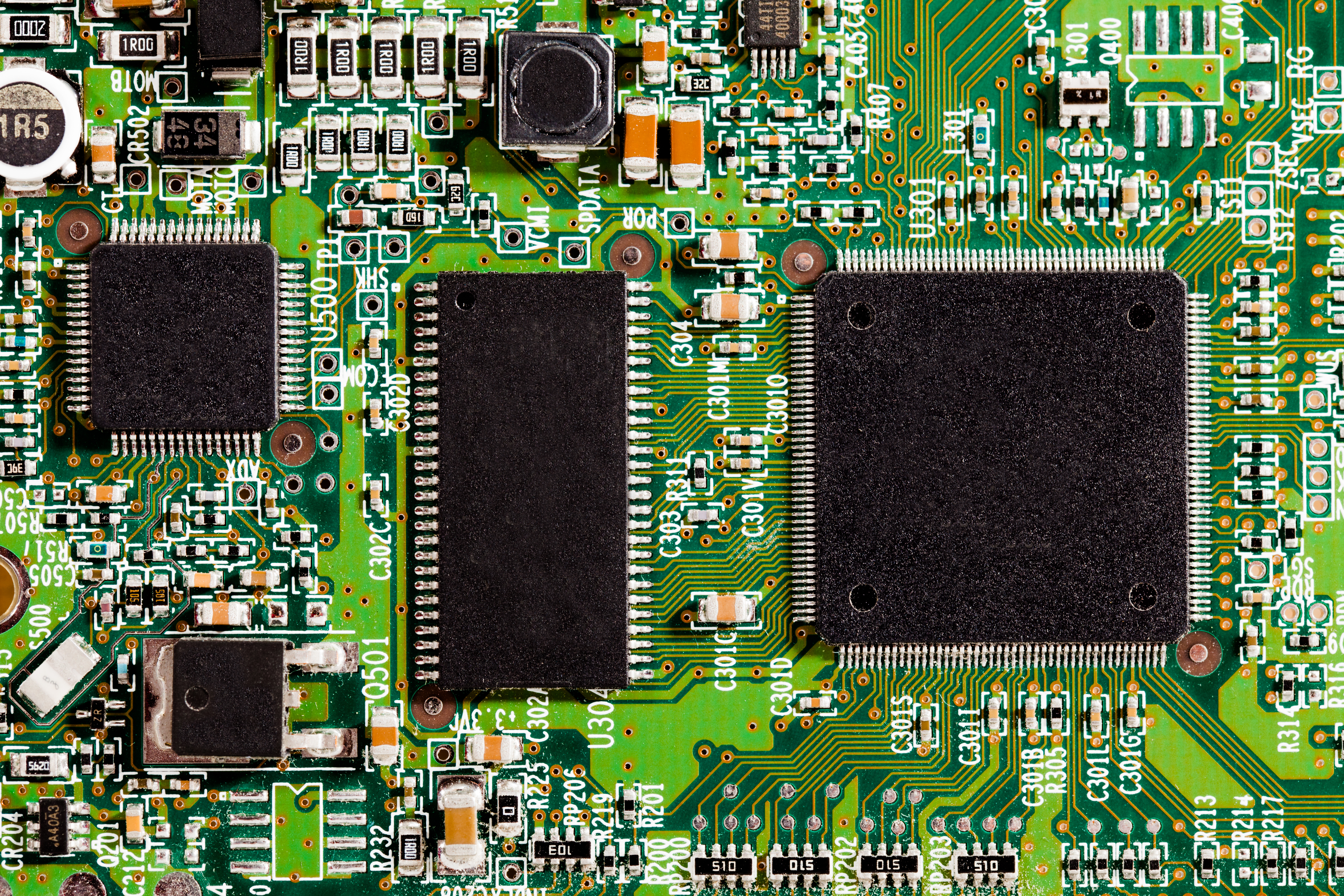
Standard vs. Advanced
Specifications | Standard | Custom |
|---|---|---|
Layer Count | 0 - 10 Layers | 0 - 40 Layers |
Turn Time | Same Day - 5 Day | Same Day - 4 Weeks |
Quantity Req. | 1 - 10000+ | 1 - 10000+ |
Materials | FR-4 | FR-4/Rogers/Polyimide/Aluminum Clad/High-Temp. FR4/Others » |
Plating Finish | Lead-Free HAL* | Electrolytic Hard Gold/Soft Gold/ENIG/Nickel/Immersion Silver OSP/Leaded & Lead-Free HAL |
Cert. / Qualifications | IPC Class 2 - A600 | IPC6012 Class 2-3A / IPC6018 Class 3 MIL-PRF-31032 / MIL-PRF-55110 / ISO 9001:2008 / AS9100C / More » |
Board Thickness | .031" / .062" / .093" / .125" | Full Range Available |
Copper Weight | 1 oz. Inner / Up to 2 oz. Outer | 0.5 - 4 oz. Inner / 1 - 20 oz. Outer |
Trace/Space | 5 / 5 Mils | Down to 2.75 / 3 Mils |
Solder Mask (LPI) | Green | Various Color Options |
Legend | White | Various Color Options |
Min. Hole Size | 0.010" | 0.004" |
Hole Tolerance | +/- 0.005" | +/- 0.003" (Upon Request) |
Rout Tolerance | +/- 0.010" | +/- 0.005" (Upon Request) |
Slots/Cutouts/Edges | Non-Plated Only | Plated / Non-Plated |
Plated Holes | Plated / Non-Plated | Plated / Non-Plated |
UL Markings/Dates | Yes** | Yes** |
Lead-Free Markings | Yes | Yes |
Gold Fingers | Yes | Yes |
Fiducials | Yes | Yes |
Scoring | Yes | Yes |
ITAR | Yes | Yes |
Castellated Holes | X | Yes |
Controlled Dielectric | X | Yes |
Controlled Impedance | X | Yes |
Counter Sinks | X | Yes |
Counter Bores | X | Yes |
Blind/Buried Vias | X | Yes |
Microvias | X | Yes |
Mask Plugged Vias | X | Yes |
Via-in-Pad | X | Yes |
Etch Back | X | Yes |
Tetra Etch | X | Yes |
Cover Coat | X | Yes |
Cavity Process | X | Yes |
Laser Rout | X | Yes |
LPI Legend | X | Yes |
Edge Mill | X | Yes |
Unique Serialization | X | Yes |
Back Drilling | X | Yes |
Controlled Depth Drill | X | Yes |
* Standard Spec pricing assumes lead-free HAL. Alternatively, board finish may be upgraded to ENIG or Silver at no additional cost in the rare event lead-free HAL becomes temporarily unavailable.
** Added markings contingent on available space on boards. 94V-0 may be added upon request at the time of order entry or if noted in files.
Please Note: Holes will be plated if no specifications provided. Default Solder Mask color is Green unless another color option is requested. Default Legend (Silkscreen) color is White unless another color option is requested.
Still wondering whether or not your board is a Standard or Advanced PCB?
If you are still debating standard vs. advanced PCB, keep in mind what you ultimately need your board to do. When you design your PCBs you can use our free DFM file check system to avoid CAM holds. You can also find a full list of capabilities online to help inform your decision
PCB Laminates & Advanced Materials
Laminate selection directly impacts signal integrity, thermal reliability, manufacturability, and long-term PCB performance. AdvancedPCB supports fabrication across a broad range of PCB laminate systems including standard FR-4, low-loss digital materials, RF laminates, polyimide systems, and thermal management substrates.
Material families include:
- Standard and high-Tg FR-4 materials
- Low-loss laminates for high-speed digital systems
- Rogers and Taconic RF laminate systems
- Polyimide materials for high-temperature applications
- Aluminum-clad and IMS thermal materials
Laminate systems are commonly selected according to IPC-4101 slash sheet requirements governing dielectric properties, thermal performance, CAF resistance, and dimensional stability. Low-profile and very-low-profile (VLP/HVLP) copper foils are often used in advanced stackups to reduce conductor loss and improve high-speed signal performance.
Multilayer PCB Stackups
Multilayer stackup architecture directly affects controlled impedance performance, signal integrity, thermal behavior, and manufacturability.
AdvancedPCB supports multilayer stackups from 2 through 40 layers across standard, HDI, RF, and hybrid constructions.
Capabilities include:
- Controlled dielectric stackup planning
- High-speed and RF stackup optimization
- Hybrid RF + digital multilayer constructions
- Prepreg and core selection guidance
- Copper balancing for thermal and lamination stability
- Controlled impedance modeling and verification
Each sequential laminat41ion cycle introduces additional thermal exposure, making copper balance, resin flow control, and registration accuracy critical to long-term reliability.
Certifications
AdvancedPCB manufactures advanced technology PCBs under controlled fabrication and inspection processes designed for high-reliability applications.
Supported standards and certifications include:
- IPC-6012 Class 2 and Class 3
- IPC-6018 Class 3 for RF and microwave PCB applications
- IPC-6016 for HDI PCB qualification and performance
- IPC-1791 Qualified Manufacturers Listing (QML)
- AS9100D with ISO 9001:2015
- ITAR Registration
- RoHS and REACH compliant finishes
Reliability validation may include IPC-TM-650 test methods for thermal stress, interconnect integrity, and material performance.
Why Engineers Choose AdvancedPCB for Complex Design Fabrication
Advanced PCB fabrication requires more than standard PCB processing. It requires material expertise, process control, and engineering collaboration focused on manufacturability and long-term reliability.
Engineers choose AdvancedPCB for:
- RF, HDI, thermal management, and heavy copper expertise
- Controlled impedance and advanced stackup support
- U.S.-based engineering and manufacturing
- Prototype through production scalability
- Engineering-driven DFM collaboration
- High-reliability fabrication processes
- Advanced material and laminate support
By involving fabrication engineering early in the design process, teams can reduce redesign cycles, improve manufacturability, and accelerate qualification timelines.
Engineering FAQs