


Circuit Card Assembly: A Comprehensive Overview
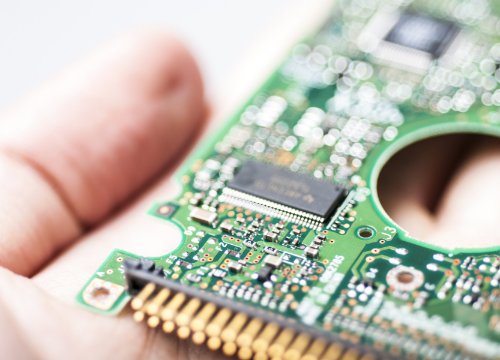
Circuit card assembly (CCA) is a critical stage of electronics manufacturing where a fabricated printed circuit board is populated, soldered, inspected, and tested to create a fully functional hardware module. In applications ranging from aerospace & defense and medical systems to industrial and consumer electronics, circuit card assemblies translate PCB designs and component selections into qualified, manufacturable, and testable assemblies ready for system integration.
This overview explains what CCAs include, how circuit card assembly manufacturing is performed, the components involved, and proven practices that drive performance, reliability, and lifecycle value. For teams asking what is a circuit card assembly, this guide offers clear answers backed by industry standards and practical manufacturing experience.
What Is Circuit Card Assembly?
A circuit card assembly is a complete electronic subassembly built on a printed circuit card populated with components, hardware, and markings, often finished with protective coatings. A CCA is typically delivered as a qualified, testable unit ready to integrate into a larger system. If you are evaluating what is a circuit card assembly, think of it as more than a simple board. It is a verified module designed for operational service.
CCAs serve as the physical platform for signal processing, power regulation, control, and communications. Their quality is directly tied to overall system reliability, performance, and maintenance costs across demanding applications such as avionics, industrial controls, telecommunications, and medical devices.
CCA vs. PCB assembly:
PCB assembly commonly refers to the process of placing and soldering components onto a bare PCB. A circuit card assembly encompasses the assembled PCB plus added elements such as connectors, cabling, mechanical reinforcements, shielding, conformal coating or potting, serialization, firmware loading, and full test documentation. In many regulated sectors, “CCA” denotes a production-ready circuit card module rather than just a populated board. In short, circuit card assembly captures the broader scope required for deployment.
The CCA Manufacturing Process
Building a circuit card assembly follows a disciplined, documented sequence to ensure repeatable quality, traceability, and compliance. The following steps represent best-in-class circuit card assembly manufacturing:
-
Design and review
DFM and DFT assessments, material selection, risk analysis, and documentation review in alignment with IPC-2221 design guidelines. -
Procurement and fabrication
Component sourcing, bare PCB fabrication to applicable IPC-6012 requirements, and surface finish selection based on assembly and reliability needs. -
Solder paste printing
Stencil design and setup, solder paste verification, and deposition control. -
Component placement
SMT placement and through-hole insertion with orientation, polarity, and package handling controls. -
Soldering
Reflow soldering for SMT components and selective or wave soldering for through-hole technology, performed in accordance with IPC-J-STD-001 soldering requirements. -
Inspection
Automated optical inspection (AOI) for placement and solder quality and X-ray inspection for BGAs and bottom-terminated components. -
Testing
In-circuit test (ICT), boundary scan, and functional test to verify electrical performance against specifications. -
Protective treatments
Conformal coating or potting where required, using materials qualified to IPC-CC-830, followed by curing and inspection. -
Final assembly
Hardware installation, connector attachment, labeling, serialization, and firmware programming where applicable. -
Packaging and documentation
ESD-safe packaging with travelers, certificates of conformance, and test records.
Typical materials include FR-4 and high-temperature laminates, copper foils, and finishes such as ENIG, HASL, immersion silver, or ENEPIG for fine-pitch and high-reliability assemblies. Solder alloys range from SAC305 to SnPb where permitted. Assemblies may incorporate adhesives, underfill, thermal interface materials, and coatings including acrylic, urethane, silicone, or parylene. Components span semiconductors, passives, electromechanical devices, sensors, and connectors, supported by shielding and mechanical fasteners. A well-executed card assembly balances electrical performance, manufacturability, and long-term reliability.
Quality Control and IPC Compliance
Quality control is embedded throughout the circuit card assembly manufacturing process. Common practices include incoming inspection and lot traceability, moisture sensitivity level (MSL) controls, stencil and paste audits, ESD handling per IPC-1601, and thermal profiling to validate reflow processes.
Workmanship and solder joint acceptance are evaluated against IPC-A-610, with Class 2 or Class 3 criteria applied depending on the end application. IPC-J-STD-001 defines soldering materials, process controls, and acceptance requirements, forming the foundation for reliable electrical and mechanical interconnections. First article inspection, AOI, X-ray, ICT, functional testing, and environmental stress screening are used to validate assemblies prior to shipment. These controls are essential to achieving consistent yields and dependable field performance.
Essential Components of Circuit Card Assemblies
Circuit card assemblies integrate diverse components, each fulfilling specific functional roles:
- Resistors and capacitors for signal conditioning, filtering, and power decoupling
- Inductors and transformers for energy storage, filtering, and power conversion
- Diodes for rectification, clamping, and circuit protection
- Transistors and MOSFETs for amplification and switching
- Integrated circuits such as MCUs, FPGAs, and ASICs for logic, control, and processing
- Oscillators and crystals for stable timing references
- Connectors and cabling for power, data transfer, and mechanical retention
- Sensors for measurement, feedback, and environmental monitoring
Component selection directly affects performance, manufacturability, and reliability. Key considerations include electrical ratings, tolerances, operating temperature, package type and pitch, MSL classification, lead finish compatibility, derating guidelines, lifecycle stability, and regulatory compliance. Choosing components with robust thermal characteristics and long-term availability reduces risk and supports sustained production.
Best Practices for Circuit Card Assembly
Strong circuit card assembly outcomes begin with clear requirements and disciplined design and manufacturing practices:
-
DFM and DFT:
Use standardized libraries and IPC-7351 land patterns, consistent orientations, accessible test points, and adequate keep-outs for rework and coating. -
Signal integrity:
Control impedance for high-speed nets, manage return paths, and minimize crosstalk through disciplined stackups and routing rules. -
Power integrity:
Place decoupling capacitors close to IC power pins, segment planes where appropriate, and validate transient response under load. -
Thermal management:
Use copper pours, thermal vias, heat sinks, and interface materials to control junction temperatures. -
Surface finish and soldering:
Select finishes compatible with fine-pitch components and validate soldering profiles to IPC-J-STD-001 requirements. -
Reliability enhancements:
Apply underfill for large BGAs in high-vibration environments, conformal coating for moisture protection, and enforce ESD-safe handling. -
Configuration control:
Establish firmware loading, revision control, and serialization processes for traceability.
Common pitfalls include poor stencil aperture design leading to tombstoning or voiding, failure to manage MSL bake requirements, inadequate thermal profiling, insufficient connector reinforcement, missing polarity markings, weak power integrity strategies, and lack of obsolescence planning. These risks are best addressed through cross-functional reviews, pilot builds, and data-driven process controls.
Applications of Circuit Card Assemblies
Circuit card assemblies are used across industries that demand reliable electronic performance:
- Aerospace & defense: Avionics, radar, communications, and guidance systems
- Medical: Imaging equipment, patient monitoring, and therapeutic control modules
- Industrial automation: PLCs, motor drives, robotics, and distributed sensors
- Automotive: ADAS, infotainment, battery management, and powertrain control
- Telecommunications and data centers: Networking hardware, server NICs, and storage controllers
- Consumer and IoT: Wearables, smart meters, gateways, and home automation devices
Example use cases include UAV flight controllers, power inverters, battery management systems, and edge computing gateways. Each application carries distinct requirements for environmental durability, signal integrity, and regulatory compliance, yet all rely on disciplined circuit card assembly manufacturing practices.
The Future of Circuit Card Assembly
Looking ahead, CCAs will increasingly integrate system-in-package solutions, chiplet-based architectures, and wide-bandgap power devices such as SiC and GaN. Embedded AI acceleration at the edge, improved thermal materials, and sustainability initiatives including halogen-free laminates and energy-efficient manufacturing are shaping next-generation assemblies. As integration increases and form factors shrink, advanced circuit card assembly practices remain essential to meeting stringent performance, reliability, and compliance goals.
For organizations asking what is a circuit card assembly in the context of future products, the answer is clear: a thoroughly validated, standards-compliant card assembly built to perform reliably throughout its service life.