


ENIG PCB Finish
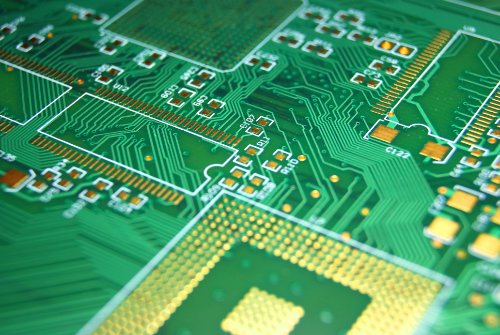
The ENIG PCB finish (Electroless Nickel Immersion Gold) is one of the most widely used surface finishes on printed circuit boards. It provides a flat, reliable, and highly solderable surface for printed circuit boards.
This guide from the AdvancedPCB explains what an ENIG PCB finish is, how the process works, when to use it, and how it compares to other finishes.
If you are selecting a PCB surface finish, ENIG is commonly chosen for fine-pitch components, high-reliability applications, and designs that require long shelf life. This article covers ENIG structure, process steps, advantages, limitations, applications, and key standards to consider.
For projects moving from design to manufacturing, working with an experienced partner for both fabrication and assembly can help ensure the ENIG finish performs as expected: https://www.advancedpcb.com/en-us/solutions/assembly-services/
What Is an ENIG Finish?
ENIG is a two-layer metallic coating applied to exposed copper pads on a PCB.
- A layer of electroless nickel is deposited first
- A thin layer of immersion gold is added on top
The nickel provides the main soldering surface and acts as a barrier. The gold protects the nickel from oxidation during storage.
During soldering, the gold dissolves into the solder, allowing the solder to bond directly to the nickel. This creates a strong and reliable connection.
In simple terms, an ENIG PCB finish is a nickel layer of strength with a gold layer for protection.
How Does the ENIG Finish Process Work?
The ENIG process is carefully controlled to ensure consistent thickness and performance.
Typical steps include:
- Cleaning and preparing the copper surface
- Activating the surface for plating
- Depositing electroless nickel (typically ~3–6 µm)
- Rinsing between process steps
- Depositing immersion gold (typically ~0.05–0.1 µm)
- Final cleaning, drying, and inspection
Controlling thickness is critical. The nickel layer must be thick enough for durability, while the gold layer must remain thin to support proper soldering. Before manufacturing, it is a good idea to validate your design to ensure the finish and stackup will perform correctly:
https://www.advancedpcb.com/en-us/tools/free-dfm-filecheck/.
Why Is the ENIG So Widely Used?
ENIG is a popular PCB finish because it provides a strong balance of performance and reliability.
Key Benefits
- Very flat surface for fine-pitch components like BGAs and QFNs
- Excellent solderability, even after storage
- Strong corrosion resistance
- Long shelf life compared to OSP
- Compatible with lead-free assembly
- Performs well through multiple reflow cycles
These benefits make ENIG a reliable choice for complex and high-density PCB designs.
Choosing the Right PCB Finish for Your Project
Selecting a finish comes down to component pitch, required planarity, assembly method, storage expectations, environmental exposure, test strategy, and budget. Consider the number of reflow cycles, whether pads will experience contact wear, and any RF constraints tied to the metal stack-up.
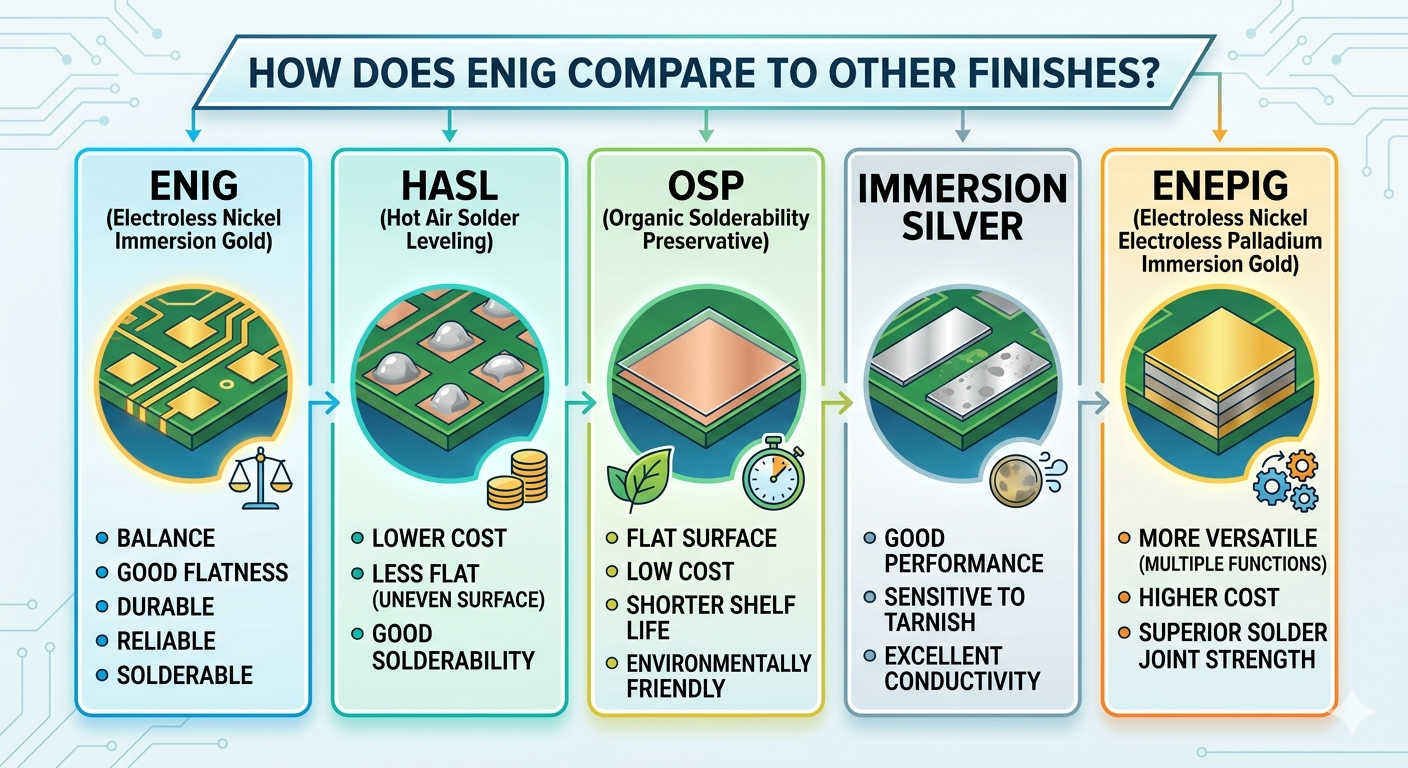
Other finish options include:
- HASL: Lower cost but less flat
- OSP: Flat and low cost, but shorter shelf life
- Immersion Silver: Good performance but sensitive to tarnish
- ENEPIG: More versatile, but higher cost
The ENIG PCB finish is typically chosen when you need a balance of flatness, durability, and reliability.
How Do You Choose the Right PCB Finish?
Practical tips to align finish with requirements:
- Choose a pcb finish ENIG for fine-pitch BGAs, dense SMT, or when long storage and repeatable assembly are priorities.
- For budget-focused, coarse-pitch assemblies, lead-free HASL may be sufficient.
- If you need ultra-flat, low-cost boards and a fast assembly cycle with limited reflows, OSP is a good option.
- For wire bonding or mixed bond-and-solder pads, specify ENEPIG to improve bondability and mitigate black pad concerns.
- For high-frequency lines where nickel may add loss, use selective finishes: keep an ENIG pcb surface finish on assembly pads and apply an alternative finish to critical RF traces.
What Are the Drawbacks of an ENIG PCB Finish?
While the ENIG finish offers many advantages, there are a few tradeoffs.
- Higher cost than HASL or OSP
- Requires tight process control
- Risk of black pad if not properly managed
Black pad is a defect caused by corrosion at the nickel surface, which can lead to weak solder joints. This risk is minimized when the process is well controlled.
Where Is ENIG Used?
ENIG is used as a finish in applications where reliability and precision are important:
- Consumer electronics
- Data center and networking equipment
- Automotive systems
- Industrial controls
- Medical devices
- Aerospace and defense
https://www.advancedpcb.com/en-us/markets/defense-aerospace/.
It is especially useful for:
- Fine-pitch BGAs
- Dense SMT layouts
- Microvias in pad
- Small passive components
The flat surface helps improve assembly consistency and reduces common defects.
Is ENIG Good for High-Frequency Designs?
ENIG works well for most digital and high-speed designs. However, the nickel layer can increase signal loss at very high frequencies, especially in RF and mmWave applications.
To address this, engineers may:
- Use ENIG finish on pads only
- Apply alternative finishes on RF traces
- Consider ENEPIG for specialized needs
The key point is that the ENIG PCB finish includes nickel, which affects signal performance at higher frequencies.
Which Standards Apply to the ENIG PCB Finish?
When specifying an ENIG finish, these standards are commonly referenced:
- IPC-4552 for ENIG surface finish requirements
- IPC-6012 for PCB performance and qualification
- IPC-A-600 for acceptability and inspection criteria
- J-STD-001 for assembly and soldering
These standards help ensure consistent quality and performance.
How Do You Ensure ENIG Finish Quality?
Quality control is critical for a reliable finish. Common checks include:
- XRF measurement of nickel and gold thickness
- Solderability testing
- Microsection analysis
- Cleanliness and contamination testing
- Monitoring plating chemistry
Strong process control is what prevents defects and ensures long-term reliability.
Work With a PCB Manufacturer That Controls the Process
The performance of an ENIG finish depends heavily on how well it is manufactured.
When requesting a quote, include:
- Target nickel and gold thickness
- Number of reflow cycles
- Storage requirements
- Any high-frequency considerations
A qualified manufacturer will help ensure the ENIG PCB finish meets your design and reliability needs.
Takeaway
The ENIG PCB finish is a proven solution for modern electronics. It provides a flat, solderable, and corrosion-resistant surface that supports high-density designs and reliable assembly.
When properly specified and manufactured, it delivers consistent performance from prototype through production.
Related Posts

The Hidden Influence of Solder Mask on PCB Quality and Performance
Signal Integrity in PCB Design
