Fiducials in PCB Manufacturing: Design Rules, IPC Guidance, and Best Practices
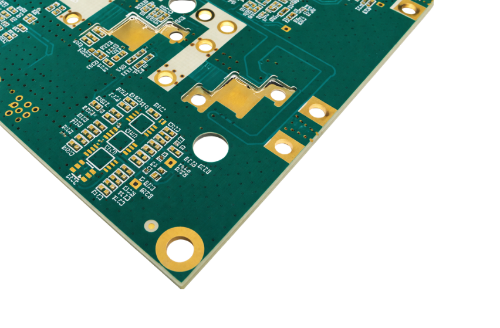
This guide explains how to design and place fiducials in PCB manufacturing to ensure accurate assembly, inspection, and high yields. It provides definitive guidance on fiducial types, dimensions, placement strategy, and relevant IPC standards for design engineers building reliable, fine-pitch assemblies.
Fiducials are mandatory for PCB assembly. Assembly equipment uses them to correct X-Y offset, rotation, and scale before printing solder paste or placing components. Without properly designed global and local fiducials, pick-and-place accuracy degrades, solder paste registration shifts, and defect rates increase. For dense layouts, BGAs, QFNs, fine-pitch connectors, and rigid-flex designs, fiducials are not optional. They are a core manufacturing requirement.
This article is written for PCB designers, hardware engineers, and layout specialists developing high-density or high-reliability products. It covers what fiducials are, how they work, where to place them, recommended dimensions, and how IPC standards apply.
What Are Fiducials in PCB Manufacturing?
Fiducials are precisely defined copper reference marks used by machine vision systems to establish board position and orientation. They provide a repeatable optical target that allows equipment to calculate and correct:
- X-Y offset
- Rotation
- Scaling variation
- Panel skew
The most reliable implementation is a circular copper pad with solder mask clearance that creates strong visual contrast. Circular geometry is preferred because it provides rotational symmetry and consistent centroid detection.
Gold-finished fiducials may improve reflectivity and durability in some processes, but flat copper with proper mask clearance is typically sufficient. The key requirement is consistent contrast and a flat, solder-free surface.
IPC-7351 (Land Pattern Design) supports standardized pad geometry practices that indirectly influence fiducial consistency. IPC-2221 (Generic PCB Design) and IPC-2222 (Rigid PCB Design) emphasize registration, manufacturability, and layout clarity, all of which support proper fiducial implementation. IPC-A-600 defines acceptability criteria that include surface condition and cleanliness expectations relevant to fiducial visibility.
Why Are Fiducials Required for SMT Assembly?
Fiducials are required because machine vision cannot rely on board edges, silkscreen, or routed outlines for precision alignment. Fabrication tolerances, panelization variation, and depanelization processes introduce positional differences.
Fiducials provide:
- Deterministic alignment
- Faster equipment setup
- Reduced placement errors
- Improved solder paste registration
- Lower rework rates
AOI systems also use fiducials to define inspection regions and reduce false calls. In high-density assemblies, especially those built to IPC Class 2 or IPC Class 3 standards under IPC-6012 performance requirements, consistent fiducial strategy directly supports yield and compliance.
What Is the Difference Between Global and Local Fiducials?
Global Fiducials
Global fiducials establish the primary coordinate system for the board or panel.
Best practice:
- Use three non-collinear fiducials
- Place near board or panel corners
- Maintain consistent styling on each board side
Three fiducials allow triangulation, enabling correction for translation, rotation, and scaling.
Local Fiducials
Local fiducials refine alignment near critical components.
Use local fiducials for:
- BGAs
- QFNs
- Fine-pitch connectors
- RF modules
- Tight-tolerance analog sections
Place two local fiducials diagonally outside the component body and within the placement tool’s camera field of view.
Fast rule: If pitch is ≤0.5 mm, add local fiducials.
Recommended Fiducial Dimensions and Clearances
| Fiducial Type | Pad Diameter | Mask Clearance | Notes |
|---|---|---|---|
| Global | 1.0–2.0 mm | 2.0–4.0 mm | Three non-linear near corners |
| Local | 0.5–1.0 mm | 1.0–2.0 mm | Two per critical component |
| Finish | N/A | N/A | Flat copper or high-contrast finish |
Clear area around the fiducial must remain free of:
- Copper traces
- Silkscreen
- Text
- Solder mask encroachment
IPC-2221 spacing guidance should be followed to maintain isolation from adjacent conductors.
Always confirm final dimensions with your assembler. Camera resolution, lighting systems, and process capability vary.
Should Fiducials Be Placed on Both Sides?
Yes. For double-sided assembly, each side must include its own fiducials.
Mirror placement improves setup consistency and reduces programming complexity. For panelized builds, include:
- Panel-level fiducials for stencil alignment
- Board-level fiducials for placement after depanelization
This dual-layer strategy improves throughput and reduces first-article adjustments.
Are Gold Fiducials Necessary?
Gold fiducials are not inherently required. Their purpose is to provide stable reflectivity under certain lighting systems.
Use gold fiducials when:
- High-reliability handling is expected
- Contrast under camera lighting is inconsistent
- Surface oxidation could affect visibility
However, avoid solder buildup and ensure the surface remains flat. Excess finish thickness can degrade optical clarity.
Always validate finish selection with the assembler’s process engineering team.
Common Fiducial Design Mistakes
- Using silkscreen-only markers
- Placing fiducials too close to board edges
- Inconsistent pad geometry
- Insufficient solder mask clearance
- Obstructed camera view
- Omitting local fiducials for fine-pitch BGAs
Silkscreen-only fiducials are unreliable. Copper is required for consistent machine vision detection.
How Do Fiducials Support IPC Class 3 and High-Reliability Builds?
In aerospace & defense and medical applications built to IPC-6012 Class 3 standards, assembly accuracy and repeatability are critical. Fiducials support:
- Consistent solder paste deposition
- Reduced component skew
- Improved BGA ball alignment
- Fewer latent defects
While IPC does not mandate specific fiducial dimensions, proper fiducial strategy supports compliance with inspection and performance requirements defined in IPC-A-600 and IPC-6012.
For high-reliability products, fiducials should be considered part of the manufacturability design review process.
Emerging Trends in Fiducial Technology
Machine vision systems are improving in resolution and AI-driven detection algorithms. Trends include:
- Smaller fiducials with optimized contrast
- Hybrid optical markers for advanced packaging
- Fiducials detectable in X-ray and 3D AOI
- Digital traceability markers for panel tracking
Fiducials are expanding beyond traditional copper pads into multi-layer registration systems.
Final Design Guidance
Fiducials are a manufacturing control feature, not a cosmetic layout element. They directly influence placement accuracy, inspection repeatability, and production yield. As board complexity increases, proper fiducial implementation becomes more critical. If you are designing a high-density, HDI, or high-reliability PCB, review fiducial strategy during layout, not after assembly feedback.
Contact AdvancedPCB to review your design and confirm fiducial placement aligns with your assembler’s equipment and IPC performance requirements.

AdvancedPCB
Related Posts
Finding the Right PCB Design Services Partner
Hard Gold, Hard Work: Designing PCB Edge Connectors That Last