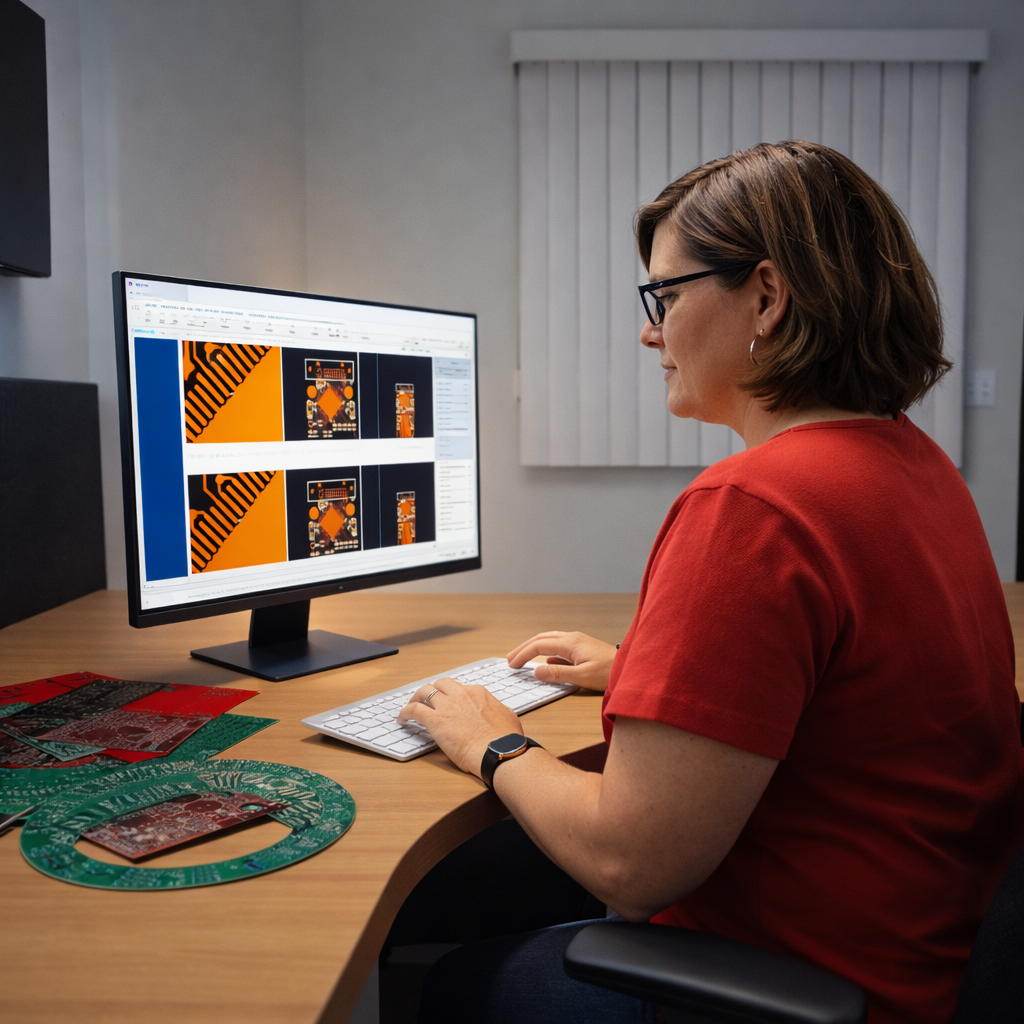
PCBs for Robotics: Enhancing Performance and Functionality
.jpg?resizemode=force&maxsidesize=500)
PCBs for robotics are critical to how robots sense, think, and move. This guide from the AdvancedPCB explains how PCBs for robotics are designed, what makes them different from standard boards, which materials and stackups are used, and how to build for reliability in real-world environments.
If you are designing a circuit board for a robotic application, the key challenge is combining power electronics, sensors, and high-speed control in a compact, durable system. This article covers design fundamentals, thermal and electrical considerations, manufacturing challenges, IPC standards, and best practices for moving from PCB prototype to production in robotic and automated applications.
Understanding PCBs in Robotics
PCBs for robotics are more complex than standard boards because they must handle multiple functions at once.
A typical robotics PCB combines:
- Sensor inputs (IMUs, cameras, encoders)
- Real-time processing (MCUs, FPGAs, CPUs)
- Power electronics (motor drivers, converters)
- Communication interfaces (Ethernet, CAN, wireless)
These systems must work together without interference. That means careful layout, grounding, and isolation are critical.
Compared to general-purpose PCBs, robotics boards typically require:
- Higher current handling for motors
- Better thermal management
- Stronger mechanical durability
- Improved noise isolation between analog and power circuits
Design Considerations for Robotic PCBs
1. Thermal Management.
Robotics systems generate significant heat, especially in motor drivers and power circuits. Common design strategies include:
- Copper planes for heat spreading
- Thermal vias to move heat between layers
- Heat sinks or chassis coupling
- Component placement near edges for better cooling
2. Size and Weight Optimization.
In robotics, size and weight often matter.
- Drones and mobile robots require lightweight designs
- Industrial systems may prioritize durability over size
Techniques include:
- HDI (high-density interconnect) routing
- Microvias and fine-pitch components
- Rigid-flex PCBs for compact 3D packaging
Robotics PCBs must survive real-world conditions like vibration, dust, and temperature changes.
Design approaches include:
- Conformal coatings for moisture protection
- Locking connectors for vibration resistance
- Reinforced mounting points
- Proper creepage and clearance for high voltage
For higher reliability builds, IPC workmanship standards such as IPC-A-600 and IPC-6012 are commonly referenced.
4. Noise and Signal Isolation
Robotics systems often mix sensitive analog signals with noisy power electronics.
Best practices include:
- Separating analog and power sections
- Using solid ground planes
- Keeping return paths short
- Shielding critical signals
This is especially important for sensors like IMUs and cameras.
Challenges in Robotics PCB Manufacturing
Designing PCBs for robotics introduces several manufacturing challenges that go beyond standard PCB design. One of the biggest challenges is combining high-current motor circuits with low-level sensor signals on the same board. This requires careful layout and stackup design to prevent electrical noise and interference from affecting sensitive signals. Proper separation, grounding, and routing strategies are critical to maintaining signal integrity.
Mechanical integration is another key consideration. The PCB must align with sensors, actuators, connectors, and wiring harnesses, while also fitting within the enclosure and mounting structure. Because of this, mechanical and electrical design need to be coordinated early in the development process to avoid fit and performance issues later.
Testing and validation for robotics PCBs are also more demanding than standard boards. In addition to basic electrical checks, these systems must be validated under real operating conditions. Common methods include automated optical inspection (AOI), in-circuit testing, functional testing under load, and hardware-in-the-loop testing. These approaches help ensure the board performs reliably in the actual environment where the robot will operate.
Specifications and Capabilities of Advanced PCBs
Layer count and material selection should reflect current density, switching speed, and mechanical needs. Multilayer designs from 4 to 16+ layers support segregation of power and signals. FR-4 variants, high-Tg materials, and low-loss laminates like PTFE or hydrocarbon ceramics address thermal and high-speed demands. Heavier copper, such as 2 oz or more on internal or external layers, supports motor currents and reduces IR drop for each robotics circuit board.
Customization options for robotics include rigid-flex constructions for moving joints, embedded passives for space savings, heavy-copper sections for power distribution, and selective surface finishes. Conformal coating, selective potting, and connector overmolding bolster environmental resilience. Advanced PCB can tailor stackups, impedance targets, and DFM rules to align with performance, reliability, and cost objectives for pcbs for robotics and complex pcb robotics assemblies.
Getting Started
A structured approach helps reduce risk and speed up development.
Start with:
- System requirements (power, sensors, communication)
- Block diagram and power budget
- Preliminary stackup and materials
- Schematic and early placement
Then move into:
- Signal integrity and thermal analysis
- PCB layout
- Design for manufacturability (DFM) review
- Prototyping and testing
Before moving to production, it is recommended to run a design check to catch manufacturability issues early. Try our FreeDFM.
For projects that require both fabrication and assembly, working with a single partner can improve speed and consistency.
Early collaboration with a manufacturer helps avoid redesigns and improves yield.
PCBs for robotics combine power, sensing, and control into a single platform that directly impacts performance and reliability.
The best results come from:
- Strong layout and stackup design
- Proper material selection
- Thermal and EMI control
- Early validation and testing
By aligning design, manufacturing, and testing from the beginning, engineers can build robotics PCBs that perform reliably from prototype through production.
- Proper creepage and clearance for high voltage
For higher reliability builds, IPC workmanship standards such as IPC-A-600 and IPC-6012 are commonly referenced.
Related Posts
5 Reasons ‘Working’ Schematics Fail During PCB Layout
Fiducials in PCB Manufacturing: Design Rules, IPC Guidance, and Best Practices