


Rigid-Flex PCBs: Design Benefits, Materials, and When to Use Them
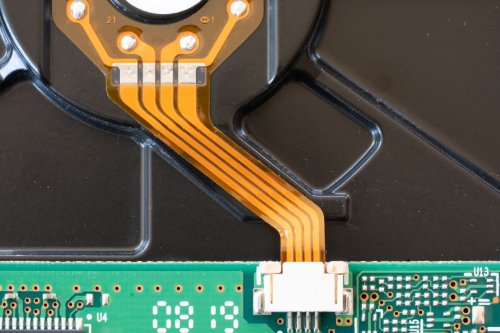
Rigid-flex PCBs combine rigid printed circuit board sections with flexible circuit layers in one integrated construction. This guide from the AdvancedPCB's team explains what rigid-flex PCBs are, how rigid-flex cable designs work, which materials and IPC standards apply, and when they are a better choice than separate boards, connectors, or wire harnesses.
If you are designing electronics for a compact, high-reliability product, a rigid-flex cable solution can help reduce assembly complexity, save space, lower weight, and improve interconnect reliability. This article covers rigid-flex PCB structure, material choices, design tradeoffs, bend radius planning, manufacturing considerations, and common applications in medical, aerospace, industrial, and consumer electronics.
What Is a Rigid-Flex PCB?
A rigid-flex PCB is a single circuit board construction that includes both rigid board areas and flexible circuit areas. In many applications, this integrated structure functions as a rigid-flex cable by replacing traditional wire harnesses or multiple interconnected boards.
The rigid sections support components and connectors, while the flexible sections bend or fold to connect those rigid areas inside the product enclosure.
How Do Rigid-Flex PCBs Work?
Rigid-flex PCBs use different material systems in different parts of the board. The rigid sections typically use FR-4 or high-Tg laminates, while the flexible sections usually use polyimide. Polyimide is widely used because it can bend, tolerate heat, and maintain stable electrical performance.
The flexible area is protected with coverlay instead of standard rigid-board solder mask. Coverlay helps protect copper traces while keeping the circuit flexible. Stiffeners may also be added under connector areas, component areas, or solder pads to provide mechanical support where bending is not desired.
Common surface finishes include ENIG for fine-pitch assembly, immersion silver for certain solderability needs, and hard gold for edge contacts or wear surfaces. The best finish depends on assembly process, connector use, shelf life, and reliability requirements.
Rigid-flex PCBs are often used when standard cables or board-to-board connectors create too much size, weight, or reliability risk. A rigid-flex cable design can eliminate many traditional interconnects while simplifying assembly and improving long-term durability.
The main benefits include smaller packaging, reduced assembly labor, improved vibration resistance, and fewer connection failures.
What Materials Are Used in Rigid-Flex PCBs?
Rigid-flex PCBs typically combine rigid laminates, flexible dielectric films, copper foil, coverlay, bonding materials, and surface finishes. The material system must be selected as a complete stackup, not as separate rigid and flex parts.
Common materials include FR-4 or high-Tg rigid laminates, polyimide flex cores, rolled annealed or electrodeposited copper, adhesive or adhesiveless flex constructions, polyimide coverlay, and selective stiffeners. Adhesiveless flex materials are often preferred for demanding bend applications because they can improve thickness control and bend reliability.
Relevant IPC material standards include IPC-4202 for flexible base dielectrics, IPC-4203 for cover and bonding materials, and IPC-4204 for flexible metal-clad dielectric materials.
What IPC Standards Apply to Rigid-Flex PCBs?
Several IPC standards are important for rigid-flex PCB design and manufacturing.
IPC-2223 is the main design standard for flexible and rigid-flex printed boards. It helps guide layout, bend areas, material selection, and flex-specific design practices.
IPC-6013E is the qualification and performance specification for flexible and rigid-flex printed boards. It applies to single-sided, double-sided, multilayer, and rigid-flex multilayer constructions and includes features such as stiffeners, plated through-holes, microvias, and blind or buried vias.
IPC-4202, IPC-4203, and IPC-4204 apply to flexible dielectric, coverlay/bonding, and flexible metal-clad materials.
IPC-A-600 is commonly used for printed board acceptability, while J-STD-001 applies to soldered assembly requirements.
What Design Rules Matter Most for Rigid-Flex Reliability?
The flex area should be designed around how the product will actually move. A static bend, which is bent during installation and then stays in place, has different requirements than a dynamic bend, which moves repeatedly during product use.
Bend radius is one of the most important design decisions. A larger bend radius reduces mechanical stress on copper and dielectric layers. As a general starting point, dynamic bends usually need a larger radius than static bends, but the final value depends on flex thickness, copper weight, layer count, and material construction.
Designers should avoid placing vias, sharp trace corners, or abrupt copper transitions in bend areas. Traces should be routed smoothly, and copper should be balanced where possible. Pads near flex transitions should use strain relief features, and connector areas should often be supported with stiffeners.
When Should You Choose Rigid-Flex?
Choose rigid-flex when your design needs compact packaging, lower weight, fewer connectors, better vibration resistance, or reliable three-dimensional folding. A rigid-flex cable architecture is especially valuable when a traditional cable or harness would make assembly difficult or reduce reliability.
Rigid-flex is a strong fit for medical electronics, aerospace systems, industrial automation, robotics, sensors, wearables, and compact consumer devices.
How Does AdvancedPCB Support Rigid-Flex Projects?
AdvancedPCB supports rigid-flex projects with stackup planning, material selection, controlled impedance review, DFM feedback, and fabrication support from prototype through production. Engineering review is especially important for bend radius, via placement, copper balance, flex-to-rigid transitions, stiffeners, and surface finish selection.
For complex designs, early collaboration helps confirm whether the rigid-flex structure is manufacturable before layout is locked. This can reduce redesigns, improve yield, and shorten the path from prototype to production.
Takeaway
Rigid-flex PCBs combine the strength of rigid boards with the flexibility of polyimide flex circuits. They can reduce connectors, save space, lower weight, and improve reliability in compact or high-vibration products.
The best rigid-flex designs start with the mechanical requirements, then build the stackup, materials, bend areas, and IPC requirements around how the product will be assembled and used. Early collaboration with an experienced PCB manufacturer is the best way to balance performance, reliability, cost, and manufacturability.