


Rigid-Flex PCB Material Guide for Design Engineers
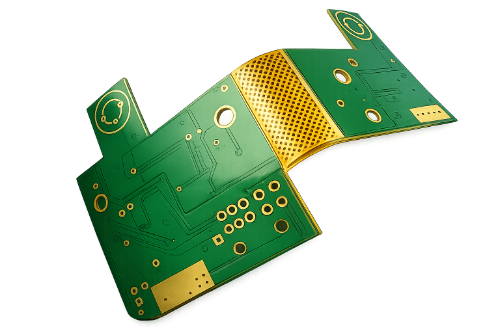
If you are evaluating rigid-flex for aerospace, medical, industrial, automotive, or consumer electronics, the most important decision is not simply whether to use rigid-flex PCBs. It is how to choose the right combination of rigid laminates, flexible dielectric materials, copper foil, coverlay, and bonding systems so the final construction matches the electrical, thermal, and mechanical demands of the application.
What Is a Rigid-Flex PCB?
A rigid-flex PCB is a printed circuit board that combines rigid board sections with flexible circuit sections in a single integrated construction. The rigid areas typically support components and provide structural stability, while the flexible areas allow bending or folding during assembly or use. IPC-6013 specifically includes rigid-flex multilayer constructions within its scope for flexible printed boards.
Compared with separate rigid boards connected by wires or connectors, rigid-flex designs can reduce interconnect count, save space, lower weight, and eliminate common mechanical failure points. That makes them especially useful in compact, high-reliability electronics where packaging density, vibration resistance, and assembly simplification all matter.
What Materials Are Used in a Rigid-Flex PCB Construction?
Rigid-flex PCB materials fall into several key categories, each serving a specific function in the stackup.
- Rigid Laminate Materials: Rigid sections commonly use FR-4 or high-speed laminates depending on signal requirements. For high-speed digital or RF designs, lower-loss materials may be selected under IPC-4103.
- Flexible Dielectric Materials: Polyimide is the most widely used flexible dielectric due to its thermal stability and mechanical durability. These materials are designed to withstand repeated bending while maintaining electrical integrity.
- Coverlay and Protective Materials:Flexible circuits typically use coverlay instead of solder mask. Coverlay materials, defined in IPC-4203, protect copper traces while maintaining flexibility.
- Bonding Materials and Adhesives: Rigid-flex PCB materials also include bonding systems such as prepregs and adhesive layers that join rigid and flex sections during lamination. Adhesive-free constructions are increasingly used for thinner, higher-performance designs.
How Does Copper Selection Impact Rigid-Flex PCB Materials?
Copper selection has a direct effect on bend life and manufacturability. Rolled annealed copper is generally preferred in flex regions because its ductility helps the circuit tolerate repeated bending. Electrodeposited copper is more common in rigid areas and may also be used in flex areas that bend only during installation or see limited movement in service.
This means the best copper choice depends on whether the flex region is static or dynamic, how many bend cycles the design must withstand, and how much thickness can be tolerated in the flex stack. Using thicker copper can improve current capacity, but it also reduces flexibility and can shorten bend life if the design is not balanced carefully.
Why Does Adhesive Selection Matter in Rigid-Flex?
Adhesives play a major role in how rigid-flex PCB materials behave under thermal and mechanical stress.
Adhesive-based constructions are widely used and cost-effective, but adhesive-free systems offer advantages in high-performance designs. These benefits can include:
- Reduced overall thickness
- Improved dimensional stability
- Lower dielectric loss for high-speed signals
- Better thermal performance
Material selection here depends on the application, especially if the design involves high-speed signals, tight bend radii, or harsh environments.
How Do Rigid-Flex PCB Materials Affect Reliability?
Rigid-flex PCB materials directly influence reliability in several key areas:
- Mechanical durability during bending
- Thermal stability during assembly and operation
- Signal integrity across rigid-to-flex transitions
- Resistance to delamination and material fatigue
Proper material selection ensures that the neutral axis is balanced, stress is minimized in bend regions, and electrical performance remains consistent across the entire structure.
Design guidance from IPC standards emphasizes avoiding vias in dynamic bend areas, controlling copper distribution, and maintaining proper bend radius based on total material thickness.
Can Rigid-Flex Support High-Speed and High-Reliability Designs?
Yes. Rigid-flex can support high-speed and high-reliability applications when the stackup, materials, and routing are engineered correctly. The design has to preserve controlled impedance, continuous return paths, and stable dielectric behavior through both rigid and flex regions. Lower-loss materials, bondless polyimide options, and disciplined transition design can all help improve channel performance.
That is why rigid-flex is used in applications such as aerospace electronics, medical devices, compact industrial controls, and other systems where space savings alone are not enough. The material system must also deliver predictable electrical performance and mechanical durability.
How Should Engineers Choose Rigid-Flex PCB Materials?
Selecting rigid-flex PCB materials starts with understanding the application requirements.
Engineers should evaluate:
- Static vs dynamic bending requirements
- Required bend radius and flex cycles
- Electrical performance and impedance control
- Thermal exposure during assembly and operation
- Total thickness constraints
From there, the material stack should be built as a complete system, not as separate rigid and flex sections. Early collaboration with a PCB manufacturer is critical to aligning material selection with fabrication capabilities and reliability targets.
How Should Engineers Choose a Rigid-Flex Material Stack?
Start with the application, not the material brand. The right stack depends on whether the board will flex once during installation or repeatedly in service, whether the design carries high-speed signals, how much thickness is allowed, and what environmental stresses the product must survive. From there, the stack can be built around the right rigid laminate, flex dielectric, copper type, coverlay system, and bonding materials.