Rigid PCB Uses: Applications, Design Considerations, and Manufacturing Practices
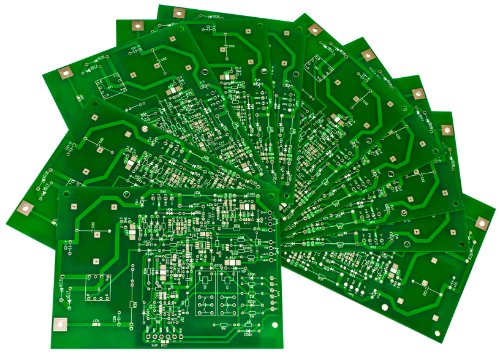
Rigid printed circuit boards (PCBs) form the foundation of countless electronic products, delivering a stable platform for components and repeatable interconnections at volume. . This article explains what rigid PCBs are, where they are used, why engineers choose them, and the design and manufacturing practices that ensure reliable performance.
The guidance in this article is provided by the AdvancedPCB engineering team, based on decades of experience manufacturing rigid, HDI, and high-reliability printed circuit boards for industries including aerospace, computing, industrial automation, and automotive electronics. The sections below cover rigid PCB construction, common applications, materials, design considerations, manufacturing processes, and relevant IPC standards that define quality and reliability expectations.
What Is a Rigid PCB?
A rigid printed circuit board is a non-flexible circuit board built from layers of dielectric laminate and copper foil that are bonded together to form a stable mechanical structure. Components such as resistors, capacitors, integrated circuits, and connectors are mounted on the board, while copper traces distribute signals and power between devices.
Key structural elements include the substrate (dielectric laminate), copper layers used for signal routing and power distribution, plated through holes and vias for interlayer connections, solder mask for environmental and electrical protection, silkscreen markings for component identification, and a surface finish such as ENIG, HASL, immersion silver, or OSP to protect exposed copper and enable soldering.
Rigid boards differ from flexible PCBs and rigid-flex circuits in both structure and intended use. Flexible circuits use bendable polyimide substrates to accommodate motion or folding during operation. Rigid-flex PCBs combine rigid sections for component mounting with flexible interconnect areas that replace cables and connectors.
Rigid PCBs are preferred when structural stability, cost efficiency, and manufacturing simplicity are priorities. Many rigid PCB uses rely on their flatness, dimensional control, and resistance to vibration.
Common materials include standard FR-4 epoxy laminate, high-Tg FR-4 for elevated operating temperatures, halogen-free FR-4 for environmental compliance, and high-frequency laminates such as Rogers or PTFE materials for RF and microwave circuits.
Typical copper weights range from 0.5 oz to 3 oz, depending on current requirements and thermal considerations.
Relevant design and fabrication standards include IPC-2221 (generic standard for PCB design), IPC-2222 (sectional design standard for rigid PCBs), IPC-6012 (qualification and performance specification for rigid printed boards), and IPC-A-600 (acceptability of printed boards). These standards establish guidelines for materials, design tolerances, manufacturing quality, and inspection criteria.
Applications of Rigid PCBs
Rigid PCBs support a broad range of electronics because they provide reliable electrical connections, dimensional stability, and scalable manufacturing processes.
- Consumer Electronics: Consumer devices rely heavily on rigid PCBs for dense component integration and high-speed signal routing. Typical examples include smartphones and tablets, laptop and desktop motherboards, wearable devices, gaming consoles, and networking equipment.
- Automotive Electronics: Electic vechicals especially contain dozens of electronic modules, many of which depend on rigid PCBs. Common automotive applications include engine control units, advanced driver assistance systems, battery management systems for electric vehicles, infotainment and connectivity modules, lighting controllers, and sensor interfaces. Automotive environments require designs capable of handling thermal cycling, vibration, and electrical noise, which makes rigid PCBs a practical baseline for many control systems.
- Industrial Equipment: Rigid PCBs are widely used in industrial electronics where reliability and longevity are critical. Typical applications include programmable logic controllers, motor drives, robotics controllers, industrial networking equipment, sensor systems, and human-machine interface electronics. These applications often require thicker boards or heavier copper layers to support power distribution and durability in harsh operating conditions.
Benefits of Using Rigid PCBs
Rigid PCBs offer a combination of mechanical strength, electrical performance, and cost efficiency that explains why they remain the default platform for most electronics.
- Durability and Structural Stability: Rigid laminate structures maintain dimensional accuracy during fabrication and assembly. Stable dielectric materials and multilayer stackups allow engineers to achieve predictable impedance control and reliable signal reference planes. Protective coatings such as solder mask and durable finishes improve resistance to moisture, chemicals, and mechanical wear.
- Cost Efficiency at Scale: Rigid PCB manufacturing is highly mature and standardized. Fabrication processes such as panelization a selecting standardized surface finishes allow manufacturers to produce boards at competitive cost across a wide range of volumes.
- Design Flexibility for Complex Circuits: Multilayer rigid PCBs enable engineers to separate power, ground, analog, and high-speed signal layers, which improves signal integrity and reduces noise coupling. Rigid boards support fine-pitch component packages, high-density routing, thermal management features such as copper pours and thermal vias, and integration of mixed-signal circuits.
Design Considerations for Rigid PCBs
Successful rigid PCB designs require careful planning of stackup architecture, routing strategies, and thermal performance early in the development process.
- Layer Stackup and Board Thickness: Rigid PCBs commonly range from 2 to more than 16 layers depending on signal complexity and routing density. Dedicated power and ground planes help stabilize reference voltages, reduce electromagnetic interference, and support controlled impedance routing. Typical board thickness ranges from 0.8 mm to 2.0 mm, although thicker boards may be used for structural strength or high-current applications. Dielectric materials and prepregs determine key electrical properties such as dielectric constant, loss tangent, and thermal stability. These parameters are especially important for high-speed digital and RF designs. Engineers often compare stackup complexity when evaluating board structures. A helpful overview of common stackups can be found in this article about https://www.advancedpcb.com/en-us/resources/blog/2-layer-vs-4-layer-printed-circuit-boards/.
- Routing and Layout: High-speed PCB layout requires maintaining consistent reference planes and minimizing signal discontinuities. Best practices include keeping high-speed traces short and referenced to continuous ground planes, matching differential pair lengths and maintaining impedance control, using appropriate via types including through-hole, blind or buried vias, or microvias depending on density requirements, placing decoupling capacitors close to power pins, and separating noisy power circuits from sensitive analog or RF circuitry. Design guidelines from IPC-2221 and IPC-2222 provide recommended values for clearances, annular rings, and trace spacing.
- Thermal Management and Signal Integrity: Rigid PCB designs must address both heat dissipation and electrical performance. Common techniques include copper pours and internal plane spreading, thermal vias beneath power devices, exposed thermal pads for heat transfer to heat sinks, controlled impedance traces for high-speed signals, and minimizing signal stubs and reflections. Simulation tools for power integrity and signal integrity analysis can help identify potential issues before fabrication.
Rigid PCB Selection Tips
Choosing the right materials, finishes, and stackups can significantly improve performance and manufacturing yield. These guidelines align common rigid PCB uses with practical build choices.
| Requirement | Recommended Approach |
|---|---|
| High Temperature | High temperature environments often benefit from high-Tg FR-4 materials, robust finishes such as ENIG, and thicker copper layers. |
| High-Speed Digital | High-speed digital designs typically require controlled impedance stackups and low-loss laminates. |
| Power Distribution | Power distribution applications may require heavier copper layers such as 2 to 3 oz copper, wider traces, and thermal vias. |
| RF and Microwave | RF and microwave circuits often use PTFE or Rogers laminates with tightly controlled dielectric properties. |
| Cost-Sensitive, High-Volumes | Cost-sensitive high-volume products commonly use standard FR-4 materials with panel-efficient designs and finishes such as HASL or OSP. |
.
Key Takeaways
- Rigid PCBs provide the structural stability, signal integrity, and manufacturing scalability needed for a wide array of electronics.
- Material selection, stackup design, and layout strategy should be aligned with the electrical, thermal, and mechanical demands of the final product.
- Following industry standards such as IPC-2221, IPC-2222, IPC-6012, and IPC-A-600 helps ensure reliable manufacturing and inspection outcomes.
- Careful layout, impedance control, and thermal strategies reduce risk and improve yield across diverse rigid PCB uses.
- Partnering with a capable manufacturer ensures consistent plating, accurate etching, and thorough testing for long-term reliability of every rigid PCB.
Many teams also use PCB assembly services to streamline the transition from board fabrication to completed electronics. Learn more about assembly capabilities at https://www.advancedpcb.com/en-us/pcb-assembly/.
Design teams can also reduce risk by running their files through FreeDFM design analysis before fabrication to identify manufacturability concerns early in the process. The tool is available at https://www.advancedpcb.com/en-us/resources/free-dfm/.
For very dense layouts and advanced packaging, technologies such as HDI printed circuit boards can be used. These designs incorporate microvias and sequential lamination to support extremely small component pitches. Learn more about advanced PCB technologies at https://www.advancedpcb.com/en-us/solutions/advanced-pcbs/.