Signal Integrity in PCB Design
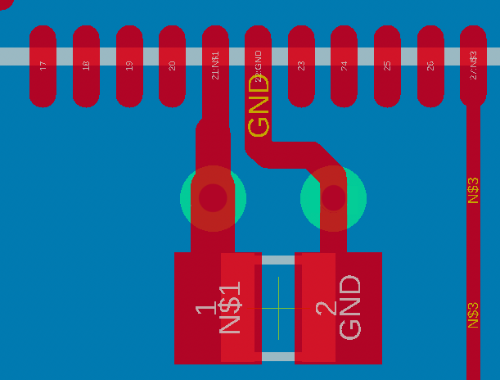
Maintaining strong signal integrity is a fundamental requirement when designing printed circuit boards. At high speeds, interconnects must be treated as controlled transmission structures, not simple conductors. Traces, vias, reference planes, and materials all contribute directly to waveform quality, timing margin, and noise susceptibility.
This article outlines practical design approaches that preserve signal integrity while remaining aligned with real manufacturing constraints. It also identifies where IPC standards provide useful design structure, fabrication guidance, and validation methods that help ensure performance is repeatable from prototype through production.
Component Placement and Functional Partitioning
Effective signal integrity begins with component placement. Grouping related circuitry minimizes interconnect length, reducing propagation delay, attenuation, and coupling. Sensitive low-voltage or high-speed logic should be physically separated from noisy power circuitry and high-current switching regions.
Placement also plays a critical role in power integrity. Decoupling capacitors must be located close to IC power pins to minimize loop inductance and supply impedance. Poor placement increases PDN noise, which directly contributes to timing jitter and eye degradation.
IPC relevance
- IPC-2221 provides general guidance on component placement, spacing, and layout principles that influence electrical performance.
- IPC-2141 offers design formulas and considerations related to impedance and current behavior that benefit early placement decisions.
Trace Routing and Signal Integrity Fundamentals
At high speeds, PCB traces behave as transmission lines. Maintaining controlled impedance through consistent trace geometry and dielectric properties minimizes reflections and supports predictable signal propagation. Trace width, spacing, and reference plane proximity must be defined based on stackup parameters rather than arbitrary design rules.
Long parallel trace segments increase capacitive and inductive coupling, leading to crosstalk. Designers should increase spacing, limit parallelism, or route orthogonally on adjacent layers. Differential signaling improves noise immunity and is preferred for high-speed serial interfaces, provided pair coupling and symmetry are maintained.
As frequencies rise, dielectric loss, copper roughness, and skin effect become significant contributors to insertion loss. Routing practices must therefore balance electrical performance with manufacturable geometries.
IPC relevance
- IPC-2141 supports impedance calculation and controlled-impedance design practices.
- IPC-2221 defines general routing, spacing, and conductor guidelines that support signal integrity when applied with high-speed constraints in mind.
Layer Stackup Selection and Reference Plane Continuity
Stackup definition is one of the most important decisions affecting signal integrity. High-speed signal layers should be placed adjacent to continuous reference planes to stabilize impedance and ensure predictable return current paths.
Discontinuities in reference planes force return currents to detour, increasing loop inductance and degrading signal quality. Power-plane segmentation must be carefully evaluated to avoid unintended return-path interruptions. Symmetrical stackups help maintain consistent electrical environments and reduce warpage risk during fabrication.
A well-designed stackup also supports PDN performance, reducing supply noise that couples into signal paths.
IPC relevance
- IPC-2221 provides baseline stackup and plane-assignment guidance.
- IPC-4101 defines material specifications, including dielectric constant and loss tangent, which directly affect impedance control and insertion loss.
Vias and High-Speed Signal Paths
Vias can create impedance discontinuities. Through-hole vias also form stubs that resonate at high frequencies, degrading insertion loss and increasing reflections.
Common mitigation strategies include backdrilling, blind and buried vias, and microvias used in HDI designs. Where layer transitions are required, signal vias should be accompanied by nearby ground vias to maintain return-path continuity and reduce loop inductance. Via placement must also avoid creating voids or plane splits beneath critical signal routes.
IPC relevance
- IPC-2221 addresses via structures and general design considerations.
- IPC-2226 provides specific guidance for HDI designs, including microvia usage and sequential lamination.
- IPC-6012 defines fabrication performance requirements that affect achievable via tolerances and reliability.
Minimizing Crosstalk and Discontinuities
Crosstalk increases as spacing decreases and parallelism increases. Long, closely spaced routes on the same layer or adjacent layers can introduce both near-end and far-end coupling. Increasing separation, routing orthogonally, and maintaining strong reference planes reduce this risk.
Impedance discontinuities caused by abrupt geometry changes, sharp corners, or layer transitions generate reflections that distort waveforms. Maintaining consistent trace geometry and smooth transitions minimizes these effects and preserves timing margin.
IPC relevance
- IPC-2221 provides spacing and routing guidance that, when applied conservatively, supports crosstalk control in high-speed designs.
Grounding, Return Paths, and Power Integrity
High-frequency return currents follow the path of least inductance, not shortest distance. A continuous ground plane beneath signal layers provides a low-impedance return path and minimizes loop area. When reference changes are unavoidable, ground stitching vias should be placed near signal transitions.
Power integrity directly influences signal integrity. PDN impedance that is too high across relevant frequencies results in voltage droop and jitter. A hierarchical decoupling strategy using bulk, mid-frequency, and high-frequency capacitors reduces PDN impedance and stabilizes signal thresholds.
IPC relevance
- IPC-2221 outlines grounding and plane-usage recommendations.
- IPC-2152 supports conductor current and thermal considerations that influence PDN design choices.
Design Verification and Simulation
Simulation is essential for validating signal integrity prior to fabrication. Pre-layout analysis helps evaluate stackup options and routing constraints, while post-layout extraction captures parasitics introduced by vias, planes, and geometry.
Time-domain reflectometry identifies impedance discontinuities, while eye-diagram and jitter analysis quantify link margin. Correlating simulation with measurement reduces design risk and iteration cycles.
IPC relevance
- IPC-TM-650 provides standardized test methods for electrical characterization, supporting consistent validation and correlation.
Manufacturability Considerations
Signal integrity targets must align with fabrication capabilities. Controlled impedance depends on achievable dielectric thickness, copper distribution, and process tolerance. Early engagement with the PCB fabricator ensures stackups, via strategies, and spacing rules are realistic and repeatable.
Advanced constructions such as blind vias and sequential lamination improve electrical performance but increase process complexity. Understanding fabrication limits prevents late-stage redesigns that compromise both performance and yield.
IPC relevance
- IPC-6012 establishes acceptance criteria for rigid PCBs, including impedance control and construction quality.
- IPC-A-600 provides visual acceptability criteria that support inspection and quality control.
Summary
Achieving reliable signal integrity requires disciplined attention to placement, routing, stackup definition, via strategy, grounding, and verification. Controlled impedance, continuous return paths, minimized discontinuities, and a stable PDN collectively determine high-speed performance. When these engineering practices are supported by simulation, validated with measurement, and aligned with IPC standards and manufacturing capabilities, signal integrity becomes predictable and repeatable rather than reactive.
Signal integrity is not a single design step. It is a system-level requirement that must be engineered into the PCB from concept through production.
Related Posts
Fiducials in PCB Manufacturing: Design Rules, IPC Guidance, and Best Practices
Finding the Right PCB Design Services Partner