


Designing and Building Rapid PCB Prototypes That Scale
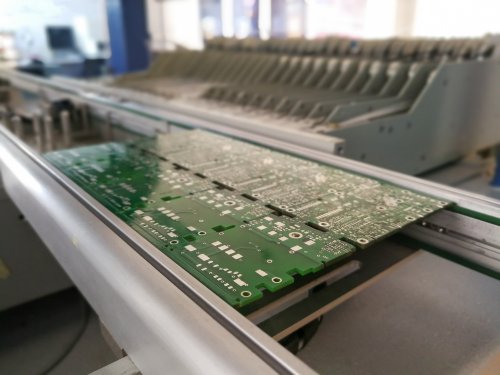
Rapid PCB prototyping shortens the path from concept to functional hardware. It enables fast iteration, early validation, and lower risk before full production. With quick-turn fabrication, high-quality builds, and modern tooling, teams compress development cycles and move to market with greater confidence. This guide explains what rapid PCB prototyping is, how the process works, common applications, how to choose a capable partner, and how Advanced PCB supports a smooth transition from idea to tested boards. For teams seeking fast PCB prototyping without compromising reliability, the practices below help ensure each printed circuit board prototype is delivered on time and ready for verification.
What Is Rapid PCB Prototyping?
Rapid PCB prototyping is the accelerated build of printed circuit board prototype units to validate electrical performance, mechanical fit, manufacturability, and design assumptions early in the product life cycle. Instead of waiting weeks for initial hardware, prototype PCBs arrive in days, enabling informed decisions and quick design refinements.
The value is clear: shorter time-to-market and better design quality. Early boards expose signal integrity challenges, placement constraints, thermal behavior, and DFM considerations before they become costly issues. Rapid PCB approaches help de-risk pilot runs by proving stack-ups, verifying impedance targets, and exercising firmware and hardware together.
Early prototypes should be designed with production intent wherever possible. Prototype layouts which ignore fabrication realities often validate the circuit but fail to validate manufacturability. Using realistic trace widths, via structures, solder mask openings, and component spacing allows prototype data to translate directly into production success.
Key advantages include faster development, lower rework costs, stronger cross-functional collaboration, and higher confidence in performance. Teams gain real data to refine BOMs, confirm materials, and validate assembly methods. Whether you need fast PCB prototyping for a single prototype circuit board or a short run of prototype PCBs, the right work flow delivers speed with repeatable quality.
Compared with traditional methods, rapid PCB prototyping uses streamlined work flows, digital collaboration, and automated CAM checks to remove delays. Where conventional paths rely on lengthy quotes, manual file hand offs, and batch scheduling, fast PCB prototyping optimizes processes and communication to deliver speed without compromising quality.
The Rapid PCB Prototyping Process
Rapid PCB prototyping follows a clear, repeatable sequence designed to prevent surprises and maintain momentum from design to delivery.
- Design capture and review: Finalize schematics and PCB layout in your EDA tool, confirm requirements, and run internal DRC checks. IPC-2221 provides the baseline generic design rules for spacing, conductor sizing, and electrical clearances.
- File preparation: Generate Gerbers, drill files, IPC netlist, pick-and-place files, and BOMs. Include assembly drawings, polarity markings, and test notes. It is helpful to include fabrication drawings that defines finished board thickness, copper weights, impedance requirements, and acceptable tolerances.
- DFM validation: Run DRC and DFM checks to catch spacing, annular ring, solder mask, drill-to-copper, and impedance issues before hand off.
- Quoting: Submit files for instant or rapid quotes; confirm scope, lead time, and pricing early to lock schedules.
- Stack-up confirmation: Align on materials, copper weights, dielectric thicknesses, and impedance targets. Controlled impedance should be verified against actual laminate Dk values, not nominal library assumptions. Stack-up mismatches is a common mistake at the PCB prototype stage.
- Fabrication: Imaging, etching, lamination, drilling, plating, solder mask, and legend processes proceed with controlled parameters. Fabrication quality is evaluated to IPC-6012 (rigid) or IPC-6013 (flex), typically Class 2 or Class 3.
- Assembly: Components are sourced and placed; stencil thickness and aperture reductions are tuned for fine-pitch devices. IPC-A-610 defines acceptability of assembled electronic products.
- Inspection and test: AOI, X-ray inspection for BGAs, flying probe or ICT, and functional testing verify build quality and performance.
- Delivery and feedback: Boards ship with documentation; lessons learned are incorporated into the next iteration.
Technologies that enable fast and reliable prototypes include quick-turn FR-4 and high-Tg laminates, controlled impedance stack-ups, microvias and HDI, laser drilling, and finishes such as ENIG or HASL. For advanced requirements, options include HDI, rigid-flex constructions, and high-speed materials such as Rogers or PTFE blends. Avoid material changes whenever possible between prototype and production.
Design File Best Practices for Speed and First-Pass Success
Accurate and complete design files are critical to speed and yield. Provide:
- Gerbers and drill files
- IPC netlist
- Board outline and mechanical features
- Stack-up requirements and impedance targets
- BOM with approved alternates
- Pick-and-place files with rotations defined
- Assembly drawings and notes
- Test instructions
Clear documentation can reduce turn-time by up to 2 days in many cases.
Applications of Rapid PCB Prototyping
Rapid PCB prototyping supports consumer electronics, IoT, automotive, medical, aerospace & defense, industrial automation, telecommunications, and R&D. When speed matters, quick-turn builds enable more iterations and better outcomes.
Examples include:
- A wearable health device team validating sensor placement and power integrity using two-day prototype PCBs.
- An automotive supplier refining ADAS radar front-end designs on controlled impedance boards, reducing SI debug cycles.
- A telecom OEM achieving first-pass success on 28 Gbps HDI designs using microvias and back-drilling.
Emerging trends include AI-driven DFM checks, automated impedance-driven stack-up selection, rapid rigid-flex builds for compact enclosures, and low-volume HDI prototyping for advanced SoCs. Sustainability initiatives such as lead-free finishes and halogen-free laminates are also becoming standard in prototype builds.
Choosing the Right Partner for Rapid PCB Prototyping
Select a partner that balances speed, capability, and reliability. Key factors include lead times, supported materials, minimum feature sizes, via technologies, controlled impedance expertise, rigid-flex capability, and component sourcing agility.
Quality assurance should be demonstrated through standards compliance. Look for:
- IPC-6012 or IPC-6013 fabrication certification
- IPC-A-610 assembly workmanship
- AOI and X-ray inspection
- Flying probe or ICT testing
- Documented DFM and DFA processes
Advanced PCB acts as an extension of your design team. Our engineering team reviews files for manufacturability, aligns stack-ups and tolerances, and provides actionable feedback to drive first-pass success. With streamlined quoting, dependable schedules, and thorough inspection, we help move designs from layout to tested hardware with confidence. Whether building a single prototype PCB or multiple iterations, we ensure each printed circuit board prototype is ready for validation and a smooth transition to production. Learn more about our quick-turn and rapid prototype solutions.