Prototype PCB vs. Full Spec Production: A Guide for Design Engineers

This article explains the difference between prototype PCB fabrication and full specification PCB production, and how design engineers should evaluate each stage in the product lifecycle. We will cover prototype PCB services, quick-turn manufacturing, design validation, DFM considerations, material selection, cost drivers, scalability, and the transition from engineering builds to full spec production.
Written by the AdvancedPCB engineering and manufacturing team, this guide reflects practical fabrication experience supporting aerospace & defense, medical, industrial, and high-speed computing programs.
What is a Prototype PCB?
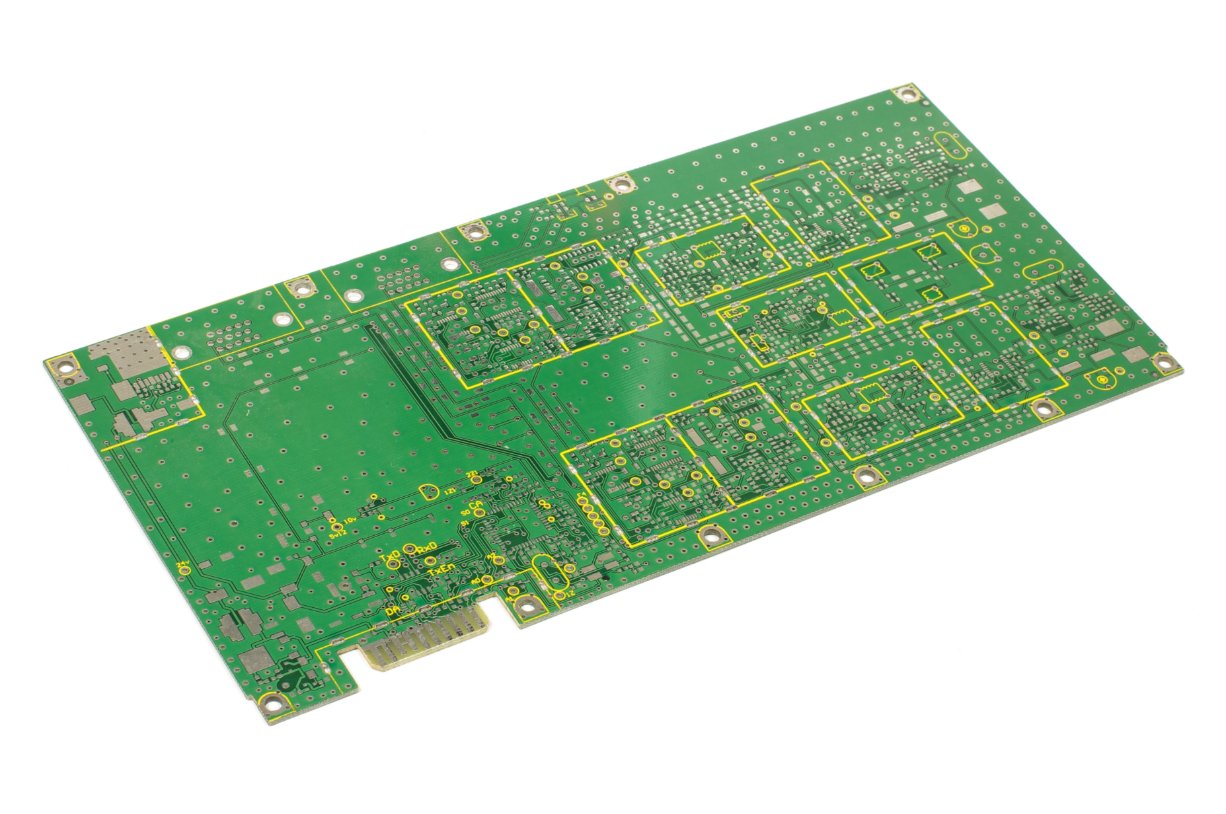
PCB prototypes are the first samples of products that are built with the primary aim of testing the functionality of the design ideas. Designers and engineers use different types of PCB prototypes to test various aspects of a selected design.
Prototype PCB fabrication is typically used during:
- Initial design release
- Engineering validation (EVT/DVT)
- Layout revisions
- Component substitutions
- Compliance pre-scan testing
- Firmware bring-up
Unlike breadboard-only evaluation, a fabricated prototype PCB confirms real copper geometry, dielectric performance, and drilled feature tolerances.
If you are still evaluating your layer structure, review our guide on 2-Layer vs. 4-Layer Printed Circuit Boards to determine the appropriate architecture before prototyping.
Why Prototype PCB Fabrication Matters
PCB prototypes help speed up the process of developing a PCB design through visual assistance, complete testing, and minimizing the amount of rework required. Prototyping gets rid of guesswork by allowing engineers to quickly and accurately identify problems. Design engineers rely on prototype PCB services to reduce technical and financial risk before scaling.
-
Electrical Performance Validation. Prototype builds confirm impedance control, high-speed signal behavior, return path continuity, and power distribution performance under actual fabrication constraints. For high-speed computing and networking applications, performance considerations are discussed further in our article on PCB Design for Data Centers: Enhancing Efficiency and Performance
-
Stackup Verification. Layer symmetry, dielectric thickness, copper weight, and prepreg selection are validated in physical form, not just simulation.
-
Thermal and Mechanical Confirmation. Engineers can identify heat concentration zones, via reliability concerns, and mechanical clearance issues early.
-
DFM Risk Reduction. A qualified prototype PCB manufacturer provides design for manufacturability review before tooling or scaling decisions are finalized.
Common Characteristics of Prototype PCB Services
Most prototype PCB builds include:
- Low quantities, often 1 to 50 pieces
- Flexible stackup modifications
- Fast lead times, including quick-turn options
- Accelerated CAM review
- Engineering feedback loops
Quick-turn prototype PCB services are particularly important for:
- High-speed networking hardware
- AI accelerator platforms
- RF and microwave designs
- HDI and fine-pitch constructions
- Medical device electronics
Disadvantages of PCB Prototyping
While there are not many cons regarding PCB prototyping, it is fully dependent on how you choose to prototype the board design. Most challenges arise when using a breadboard. The breadboards often have limitations compared to using software to prototype. They are not a good option for those working on a design that requires a high voltage, or one that is very complicated. It becomes difficult to map what you are doing, which could lead to challenges along the road. While prototype PCB fabrication provides flexibility and speed, engineers should understand its boundaries.
- Unit cost is higher due to low volume
- Some specialty laminates may extend lead time
- Process optimization is not yet volume-tuned
- Yield learning is still in development
The purpose of a prototype PCB is validation, not final cost efficiency.
What is Full Spec PCB Production?
Once the engineering and design team are satisfied that the basic prototypes are working to their expectations, they can opt to make enhancements to the design to increase efficiency. Full spec production means that the team is making the actual board that will be used in your applications. At this stage, materials, stackups, drill programs, surface finishes, and documentation are locked.
Full spec production focuses on:
- Repeatability
- Yield optimization
- Supply chain stability
- Statistical process control
- Long-term reliability
Unlike prototype PCB builds, production runs are engineered for scalability and cost efficiency.
Advantages of Full-Spec Production
If there is already an existing design in place to work from and you have determined that it is okay for use, numerous preliminary tests are not needed. Instead, you can go ahead and use high-end materials to make the boards. This gives you numerous options to select from. You may also incorporate advanced features. Other advantages of full production services include:
-
Cost Optimization at Scale. Panel utilization, material procurement, and process stability reduce per-unit cost.
-
Locked Materials and Stackups. Approved laminates, copper weights, and dielectric thicknesses remain consistent across builds.
-
Enhanced Process Control. Inspection protocols, traceability systems, and documented quality controls support regulated industries.
- Predictable Scheduling. Production workflows stabilize once the design is validated.
For aerospace, defense, and medical electronics programs, this stage often aligns with IPC Class 2 or Class 3 requirements.
Disadvantages of Full Spec Production
The main demerit is that the process takes a bit longer. This is because the production team is tasked to work with more volume than when doing a small patch assembly job. Secondly, you may end up spending more money to eliminate potential errors.
Prototype PCB vs Production: Technical Comparison
| Category | Prototype PCBs | Full Spec Production |
|---|---|---|
| Quantity | Low | Medium to High |
| Lead Time | Fast/ Quick-Turn | Scheduled |
| Cost Per Unit | Can Be Higher Depending on Complexity | Lower at Scale |
| Design Status | Iterative | Locked |
| Process Control | Flexible | Formalized |
| Primary Goal | Validation | Scalability |
How AdvancedPCB Supports the Full Lifecycle
As a North American PCB manufacturer, AdvancedPCB provides:
- Quick-turn prototype PCB fabrication
- HDI and high-layer-count capability
- Controlled impedance stackup engineering
- RF and microwave PCB builds
- Scalable production manufacturing
- Engineering-driven DFM review
Our process is designed to support design engineers from first article builds through stable production release.
The Bottom Line
Prototype PCB fabrication reduces uncertainty. Full spec production scales certainty.
Engineering teams that invest in structured prototype validation achieve faster time-to-market, fewer re-spins, and more predictable production ramp-ups.
If you are evaluating a prototype PCB manufacturer or planning your next engineering build, our team can review your stackup, materials, and lead time requirements.
To learn more about our services and products, contact us today.

AdvancedPCB
Related Posts
2-Layer vs. 4-Layer Printed Circuit Boards: How to Choose the Right Option

PCB Design for Data Centers: Enhancing Efficiency and Performance