What Is MIL-PRF-31032?
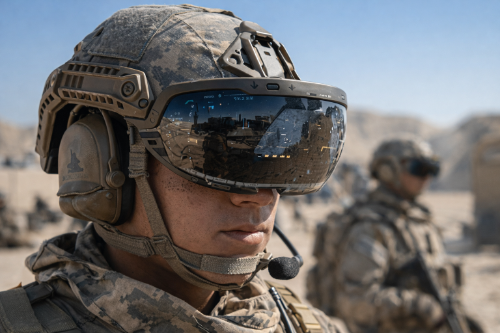
This article explains what MIL-PRF-31032 is, how it applies to printed circuit board manufacturing, how it compares to IPC standards such as IPC-6012 and IPC-A-600, and what it means to source from a QML-approved supplier. The AdvancedPCB technical content team works closely with aerospace and defense programs that require documented process control, traceability, and qualification discipline, and this overview reflects practical experience supporting high-reliability PCB builds.
MIL-PRF-31032 is a United States Department of Defense performance specification that defines quality, reliability, and process control requirements for printed circuit boards used in mission-critical systems. It establishes the framework a manufacturer must follow to demonstrate controlled processes, validated capability, and full traceability from raw materials through final inspection.
If you are asking what MIL-PRF-31032 is?, it is the benchmark used to qualify and monitor PCB fabricators supporting defense and aerospace programs.
Overview of MIL-PRF-31032
MIL-PRF-31032 is performance-based rather than purely prescriptive. Instead of only defining dimensional or visual acceptance criteria, it requires a manufacturer to prove and continuously maintain process capability.
The specification applies to:
- Rigid PCBs
- Flexible circuits
- Rigid-flex constructions
It requires:
- Documented quality management systems
- Controlled and validated fabrication processes
- Qualification testing to establish capability
- Ongoing surveillance and audit participation
- Lot conformance and documented traceability
In practice, MIL-PRF-31032 is not a one-time certification. It is an ongoing system of qualification, monitoring, corrective action, and documented process control.
It is commonly used for:
- Avionics systems
- Defense communications equipment
- Radar and guidance platforms
- Space and satellite hardware
Because it enforces traceability and configuration control, it is also relevant in sectors such as medical, industrial, and automotive electronics where reliability and environmental performance are critical.
The Qualified Manufacturers List (QML)
The Qualified Manufacturers List (QML) is maintained by the Defense Logistics Agency (DLA). Only manufacturers that have successfully completed qualification testing, demonstrated process control, and passed audit review are listed.
To be included on the QML under MIL-PRF-31032, a fabricator must demonstrate:
- Defined and controlled manufacturing processes
- Material traceability from laminate and foil to finished PCB
- Documented corrective action systems
- Successful completion of qualification test vehicles
- Ongoing compliance with audit and surveillance requirements
QML listings define each manufacturer’s approved scope, including:
- Technology types (rigid, flex, rigid-flex)
- Build classes
- Materials and dielectric systems
- Layer count and construction limitations
For procurement teams, sourcing from a QML-approved supplier reduces supplier risk and simplifies contractual compliance for defense programs.
Relationship to IPC Standards
MIL-PRF-31032 does not replace IPC standards. It builds on them.
Key related IPC documents include:
- IPC-6012 – Qualification and performance specification for rigid printed boards
- IPC-A-600 – Acceptability of printed boards (visual and workmanship criteria)
- IPC-6013 – Qualification and performance specification for flexible printed boards
- IPC-2221 – Generic standard on printed board design
IPC standards define workmanship criteria, inspection requirements, and test methodologies used broadly across commercial electronics.
MIL-PRF-31032 adds:
- Formal qualification testing at the manufacturer level
- Documented statistical process controls
- Configuration management requirements
- Defined audit cadence
- Mandatory corrective action cycles tied to performance data
In short, IPC defines what an acceptable board looks like. MIL-PRF-31032 requires proof that the manufacturer can consistently build acceptable boards over time.
Technical Requirements Under MIL-PRF-31032
While detailed requirements are defined in the specification and associated slash sheets, the framework typically includes:
- Qualification test vehicles built to representative technology
- Thermal stress testing and microsection analysis
- Plating thickness verification
- Solderability and bond strength testing
- Electrical continuity and isolation testing
- Documentation retention and traceability controls
Reliability testing must align with the risks of the construction type. For example, high layer count rigid boards and sequential lamination HDI designs require validated control of via formation, plating integrity, and dielectric performance under thermal cycling.
Transitioning from IPC to MIL-PRF-31032
Manufacturers that already build to IPC Class 3 often use that baseline as a starting point. Transitioning to MIL-PRF-31032 typically involves:
- Mapping internal procedures to the MIL-PRF-31032 requirements
- Closing documentation and traceability gaps
- Implementing enhanced statistical process controls
- Building and submitting qualification test lots
- Completing DLA audit review and approval
Maintaining QML status requires continued compliance, documented corrective action effectiveness, and ongoing surveillance participation.
Why Does MIL-PRF-31032 Matter for Defense Programs?
For aerospace & defense hardware, defects and undocumented process changes create long-term field risk. MIL-PRF-31032 reduces that risk by requiring:
- End-to-end material traceability
- Configuration control discipline
- Verified manufacturing capability
- Structured audit oversight
For OEMs and primes supporting mission-critical systems, specifying MIL-PRF-31032 reduces risk in their supply chain.
Final Considerations
Understanding what MIL-PRF-31032 is helps engineering and procurement teams align design intent with manufacturing capability. When defense, aerospace, or other high-reliability programs require documented process validation and QML status, selecting a manufacturer qualified under MIL-PRF-31032 ensures the necessary infrastructure is already in place.
If you are planning a PCB build for aerospace & defense and need guidance on MIL-PRF-31032 scope, QML sourcing, or IPC Class 3 alignment, engage with a qualified manufacturer early in the design phase to ensure stackup, materials, and qualification pathways are defined correctly from the start.

AdvancedPCB
Related Posts

RF PCB Layout Best Practices

Beyond ISO 9001: Why AS9100D is the Right Quality Standard for Your Aerospace PCBs