


PCB Material Comparison for Drone Applications: FR-4, High-Tg FR-4, Rogers, and Polyimide
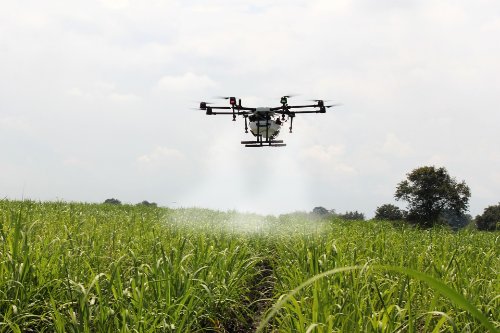
PCB material selection affects drone reliability, thermal performance, RF signal integrity, weight, and manufacturability. The best PCB material for a drone depends on what the board is designed to do. Standard FR-4 is commonly used for flight controllers and digital electronics, high-Tg FR-4 is preferred for power boards and ESCs, Rogers materials support RF and GPS applications, and polyimide is often used for rigid-flex designs where weight reduction and connector elimination are important.
This guide from the AdvancedPCB Engineering Team compares the four most common PCB material families used in drone electronics and explains when each should be used. Topics include thermal performance, RF behavior, vibration resistance, manufacturability, IPC standards, and cost considerations. Whether you're designing a commercial UAV, industrial drone, defense platform, or autonomous aircraft, choosing the right material early can improve reliability, reduce field failures, and simplify manufacturing.
| Material | Tg (°C) | RF Performance | Thermal Performance | Weight Optimization | Relative Cost | Lead Time | Best Dron Application |
|---|---|---|---|---|---|---|---|
|
Standard FR-4 |
130-140 | Moderate | Adequate | Standard | $ | Shortest |
|
| High-Tg FR-4 | 170-190+ | Moderate | Good | Standard | $$ | Short |
|
| Rogers RO4350B | >280 | Excellent | Excellent | Standard | $$$$ | Moderate |
|
| Polyimide (Rigid-Flex) | 260+ | Moderate | Excellent | Excellent | $$$ | Longest |
|
Why Material Selection Matters More in Drone Electronics
Drone electronics operate in a uniquely demanding environment where thermal stress, vibration, RF performance, and weight all interact. Unlike many stationary electronic products, drones experience continuous vibration from motors and propellers, rapid temperature changes during flight, and strict weight constraints that directly affect endurance and payload capacity.
Thermal loads are often concentrated in specific areas of the system. ESCs and power distribution boards can carry sustained currents exceeding 50A and experience significant self-heating during aggressive maneuvers. As operating temperatures approach the glass transition temperature (Tg) of the laminate, the resin system becomes more compliant and dimensional stability decreases. Repeated thermal cycling near or above Tg can accelerate reliability concerns such as barrel cracking, pad lifting, and delamination.
RF performance is equally important. GPS, GNSS, telemetry, remote-control links, and increasingly cellular communications all depend on controlled impedance and low-loss signal paths. At GPS frequencies, both dielectric loss and conductor loss contribute to signal attenuation. Lower-loss materials such as Rogers RO4350B reduce dielectric loss and help preserve signal integrity, particularly when RF trace lengths are longer or link margins are tight.
Mechanical durability also matters. Material properties influence how a PCB responds to vibration, shock, moisture exposure, and long-term thermal cycling. The cumulative effect of these stresses often determines whether a board continues operating reliably after hundreds of flight hours.
Material 1: Standard FR-4
What It Is
FR-4 is the most common PCB laminate used in commercial electronics. It is a glass-reinforced epoxy material with a dielectric constant (Dk) typically between 4.2 and 4.5 and a dissipation factor (Df) generally around 0.015–0.025 depending on frequency and material formulation. Standard FR-4 materials usually have a Tg between 130°C and 140°C.
Where It Works Well in Drone Designs
Standard FR-4 remains the best choice for many drone applications because it offers an excellent balance of performance, availability, and cost. It is well suited for:
- Flight controllers and autopilot boards
- Sensor interface boards
- Logic and processing circuits
- Prototype designs
- Lower-current commercial drone electronics
Where It Breaks Down
The limitations of standard FR-4 typically appear in thermally demanding or RF-intensive applications. ESCs and power boards operating near the material's Tg can experience reduced reliability over time. Likewise, RF traces operating at GPS, telemetry, or Wi-Fi frequencies will exhibit more dielectric loss than equivalent traces built on lower-loss materials.
Cost and manufacturability
Standard FR-4 is the lowest-cost laminate option with the shortest lead times and broadest fabrication compatibility. It is the right default for the majority of drone board types where its limitations are not a factor. The cost premium of alternatives is only justified when those limitations are.
Standard FR-4 can also absorb more moisture than some specialty laminates, which may slightly affect dielectric performance in harsh outdoor environments.
Material 2: High-Tg FR-4 PCB Material
What It Is
High-Tg FR-4 is an enhanced version of standard FR-4 designed to maintain stability at higher temperatures. While standard FR-4 typically has a Tg of 130°C to 140°C, high-Tg materials generally range from 170°C to over 190°C. Common examples include Isola 370HR, Isola 185HR, and Nelco N4000-29.
Where It Works Well in Drone Designs
High-Tg FR-4 is often the best choice for drone electronics that generate significant heat. It provides improved thermal reliability with minimal impact on cost or manufacturability.
Typical applications include:
- ESC boards and motor controllers
- Power distribution boards (PDBs)
- Battery management systems
- High-current power electronics
- Boards located near motors or battery packs
It is also well suited for drones that experience frequent temperature cycling during storage, launch, and flight.
Where It Breaks Down
High-Tg FR-4 improves thermal performance but offers little improvement in RF performance. Its electrical properties are similar to standard FR-4, making it less suitable for GPS, telemetry, antenna, and other RF circuits where signal loss is a concern.
Cost and Manufacturability
High-Tg FR-4 typically costs 10% to 20% more than standard FR-4 but can be processed using the same fabrication methods and equipment. Lead times are generally comparable, making it one of the simplest upgrades for thermally demanding drone applications.
Material 3: Rogers and Low-Loss RF Laminates
What They Are
Rogers materials are ceramic-filled hydrocarbon or PTFE-based laminates designed specifically for RF and microwave applications. Popular materials include Rogers RO4003C and RO4350B, both of which offer lower loss and more stable dielectric properties than conventional FR-4.
For comparison, RO4350B has a Df of approximately 0.0037 at 10 GHz, while many standard FR-4 materials measure around 0.020–0.025. This difference can significantly improve insertion loss and signal integrity in RF applications.
Where They Work Well in Drone Designs
Rogers materials are typically used when RF performance is a primary design requirement:
- GPS and GNSS modules
- Telemetry radios
- Long-range communications systems
- Radar altimeters
- RF front-end circuits
- Defense and ISR platforms
The stable dielectric properties of Rogers materials help maintain impedance consistency across temperature changes, which can improve RF performance in demanding environments.
Where They Break Down
Rogers materials should not automatically be specified for every RF board. Many commercial GPS and communications products operate successfully on FR-4. The benefits of Rogers become most valuable when minimizing RF loss, improving antenna efficiency, extending range, or maximizing signal quality are critical design goals.
The higher material cost, longer lead times, and additional fabrication considerations mean Rogers materials should be reserved for applications where their advantages justify the investment.
Cost and Manufacturability
Rogers laminates carry a significant cost premium and require manufacturing experience with ceramic-filled and PTFE materials. Fabricators must use appropriate drill feeds and speeds to avoid delamination and fiber pullout. Surface finish selection is also more constrained — ENIG is the preferred finish for Rogers materials, as HASL processes can introduce thermal stress incompatible with PTFE substrates.
Lead times for Rogers materials are typically longer than FR-4 and should be confirmed with the manufacturer before finalizing a BOM.
Material 4: Polyimide (Flex and Rigid-Flex)
What It Is
Polyimide is the primary material used in flexible and rigid-flex PCBs. Unlike rigid FR-4 laminates, polyimide can bend repeatedly without cracking, making it ideal for designs that require flexibility or three-dimensional packaging. Polyimide materials typically have a Tg above 260°C and offer excellent thermal stability and durability.
In rigid-flex designs, polyimide flex layers are combined with rigid FR-4 or high-Tg FR-4 sections, allowing circuits to bend while still providing rigid areas for components and connectors.
Where It Works Well in Drone Designs
Polyimide is most valuable when weight reduction, vibration resistance, or compact packaging are key design goals.
Typical applications include:
- Compact flight controllers and autopilot systems
- Gimbal electronics
- Payload and sensor systems
- Designs with fold points or moving sections
- Applications where connector elimination improves reliability
Rigid-flex designs can reduce weight, save space, and eliminate connectors that may loosen or fail under vibration.
Where It Breaks Down
Rigid-flex PCBs are more complex to design and manufacture than standard rigid boards. Bend radii, flex transitions, stackup construction, and copper routing must be carefully designed to avoid long-term reliability issues.
Polyimide materials also cost significantly more than standard FR-4, particularly at prototype volumes.
Cost and Manufacturability
Rigid-flex is typically the most expensive option in this comparison and requires a manufacturer with specialized flex and rigid-flex experience. However, the added cost is often justified when the benefits of weight reduction, improved reliability, and compact packaging provide system-level advantages.
Which IPC Standards Apply to Drone PCB Materials?
Several IPC standards help define material performance, reliability, and manufacturing requirements for drone electronics.
- IPC-4101 defines performance requirements for rigid PCB laminates, including many FR-4 and high-Tg FR-4 systems commonly used in drone electronics.
- IPC-6012 establishes qualification and performance requirements for rigid PCBs used in flight controllers, ESCs, power distribution boards, and other rigid drone electronics.
- IPC-6013 applies to flexible and rigid-flex PCB constructions built using polyimide materials.
- IPC-2221 provides general PCB design guidance, while IPC-2223 addresses design requirements specific to flex and rigid-flex circuits.
Using materials that comply with recognized IPC specifications helps improve consistency, manufacturability, and long-term reliability.
Choosing the Right Material for Each Board Type
The most effective approach is to select materials based on board function rather than choosing a single material for the entire drone platform.
- Flight Controllers: Standard FR-4 is typically sufficient unless integrated RF functions require a mixed-dielectric design.
- ESC Boards: High-Tg FR-4 with appropriate copper weight and thermal management features.
- Power Distribution Boards: High-Tg FR-4 combined with heavy copper construction.
- GPS and GNSS Modules: Rogers RO4003C or RO4350B when RF performance and antenna efficiency are critical.
- Telemetry and Communication Boards: Rogers or other low-loss materials for long-range and high-frequency applications.
- Gimbal and Payload Electronics: Polyimide rigid-flex when connector elimination, vibration resistance, or compact packaging is required.
No single PCB material is right for every board in a drone platform. Standard FR-4 remains the best choice for many flight control and digital electronics applications. High-Tg FR-4 improves thermal reliability for power electronics. Rogers materials support RF and navigation systems where signal integrity matters most. Polyimide enables compact rigid-flex designs that reduce weight and eliminate connectors.
Choosing the right material early in the design process is far less expensive than discovering its limitations during testing or after deployment. By aligning material selection with the thermal, electrical, mechanical, and environmental requirements of each board, engineers can build more reliable drone electronics while controlling cost and manufacturability.