


What Is Solder Mask on a PCB?
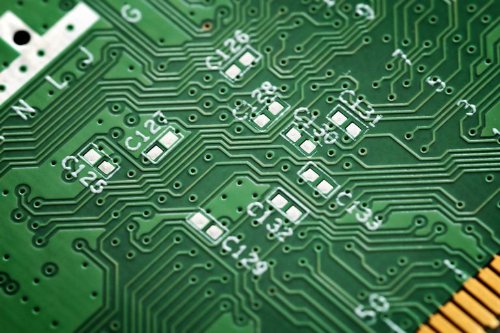
Solder mask is the protective coating that covers most of the copper circuitry on a printed circuit board (PCB). It helps prevent unwanted solder connections during assembly and protects copper traces from oxidation, contamination, and handling damage.
Solder mask is also called solder resist. Although most PCBs have green solder mask, the coating is available in many colors.
What Does Solder Mask Do?
Solder mask has three main purposes:
-
Prevents solder bridges. It helps keep solder from flowing between adjacent copper features during assembly.
-
Protects copper traces. It reduces exposure to moisture, oxidation, and contaminants that can affect long-term reliability.
-
Provides electrical insulation. It creates an insulating barrier over covered conductors, although it does not replace required electrical clearances.
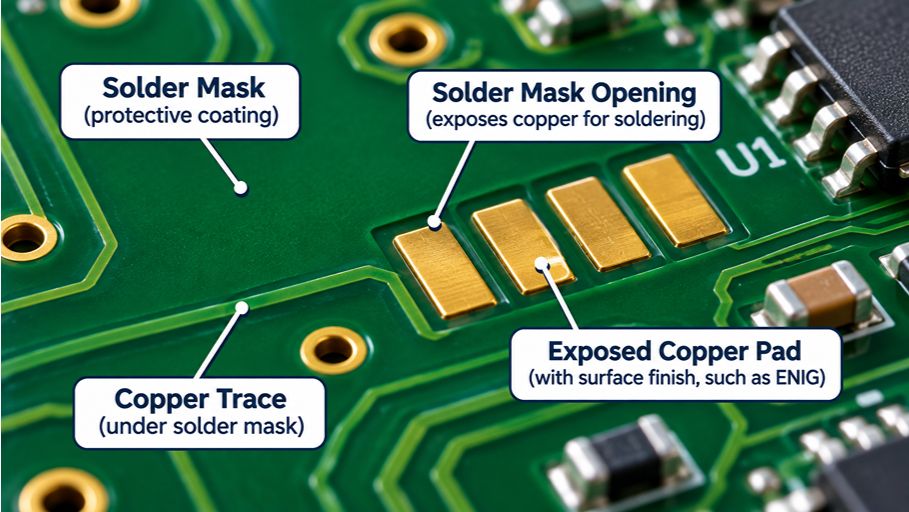
Solder mask is applied selectively. Component pads, test points, and other features that require exposed metal are left uncovered.
Where Is Solder Mask Located on a PCB?
Solder mask is applied to the outer surfaces of a PCB, over the copper circuitry. It is commonly used on both sides of a double-sided or multilayer board. On a typical green PCB, the visible green areas are covered by solder mask. The exposed metallic pads are areas where solder mask openings allow components to be connected. The copper traces underneath the coating may still be visible as slightly raised patterns, depending on the board construction and lighting.
Is Solder Mask the Same as Solder Paste or Silkscreen?
No. These materials serve different purposes during PCB fabrication and assembly.
| PCB Feature | Purpose |
|---|---|
| Solder mask | Protects copper and helps prevent unwanted solder connections |
| Solder paste | Forms solder joints between components and PCB pads during assembly |
| Silkscreen | Displays component labels, reference designators, and other markings |
| Surface finish | Protects exposed copper pads and provides a suitable surface for soldering |
Why Are Most PCB Solder Masks Green?
Green is the most common solder mask color because it is widely available, has a long history in PCB manufacturing, and generally provides good contrast for visual inspection. However, solder mask color does not determine the electrical performance of a PCB.
Common alternatives include:
-
Black: Popular for products where appearance is important.
-
White: Frequently used in LED lighting applications because of its reflectivity.
-
Blue: Often selected for product identification or appearance.
-
Red: Another common option for distinguishing PCB designs.
Specialty colors may have different manufacturing limitations, so engineers should confirm availability and design requirements with their PCB manufacturer.
Does Every PCB Need Solder Mask?
No. Although solder mask is standard on most rigid PCBs, some specialized designs use exposed copper or omit conventional solder mask in selected areas. Examples include certain electrical contact surfaces, RF structures, and other applications where the coating could interfere with the intended function. For most electronic products, solder mask provides valuable protection and helps improve assembly consistency.
What Happens if Solder Mask Is Damaged?
Damaged or missing solder mask can leave copper traces exposed to the surrounding environment. Depending on the location and severity, potential concerns include corrosion, contamination, and unintended solder connections during assembly. Minor cosmetic imperfections may be acceptable, while defects exposing critical conductors or interfering with solder pads can require repair or rejection.
IPC-A-600 provides relevant printed board acceptability criteria, while IPC-SM-840 addresses permanent solder mask material qualification and performance.
Solder Mask and PCB Manufacturing
Solder mask is one of the final protective layers applied during PCB fabrication. Its design must account for exposed component pads, vias, and other features that require precise openings. For engineers working with fine-pitch components, the dimensions of these openings and the narrow strips of mask between pads can affect manufacturability. For a deeper technical explanation, read The Hidden Influence of Solder Mask on PCB Quality and Performance, which covers solder mask materials, application processes, design rules, and inspection requirements.
AdvancedPCB manufactures a wide range of rigid, multilayer, and HDI printed circuit boards. Our engineering teams can help evaluate PCB fabrication requirements, including solder mask design and manufacturability.
Explore AdvancedPCB's PCB manufacturing capabilities.

AdvancedPCB
Additional Solder Mask FAQs
Related Posts
Large Scale PCB Production
The PCB Fabrication Process
